

India’s construction equipment makers are moving beyond price to compete on technology, operating costs and global reach, Richa Tyagi writes.
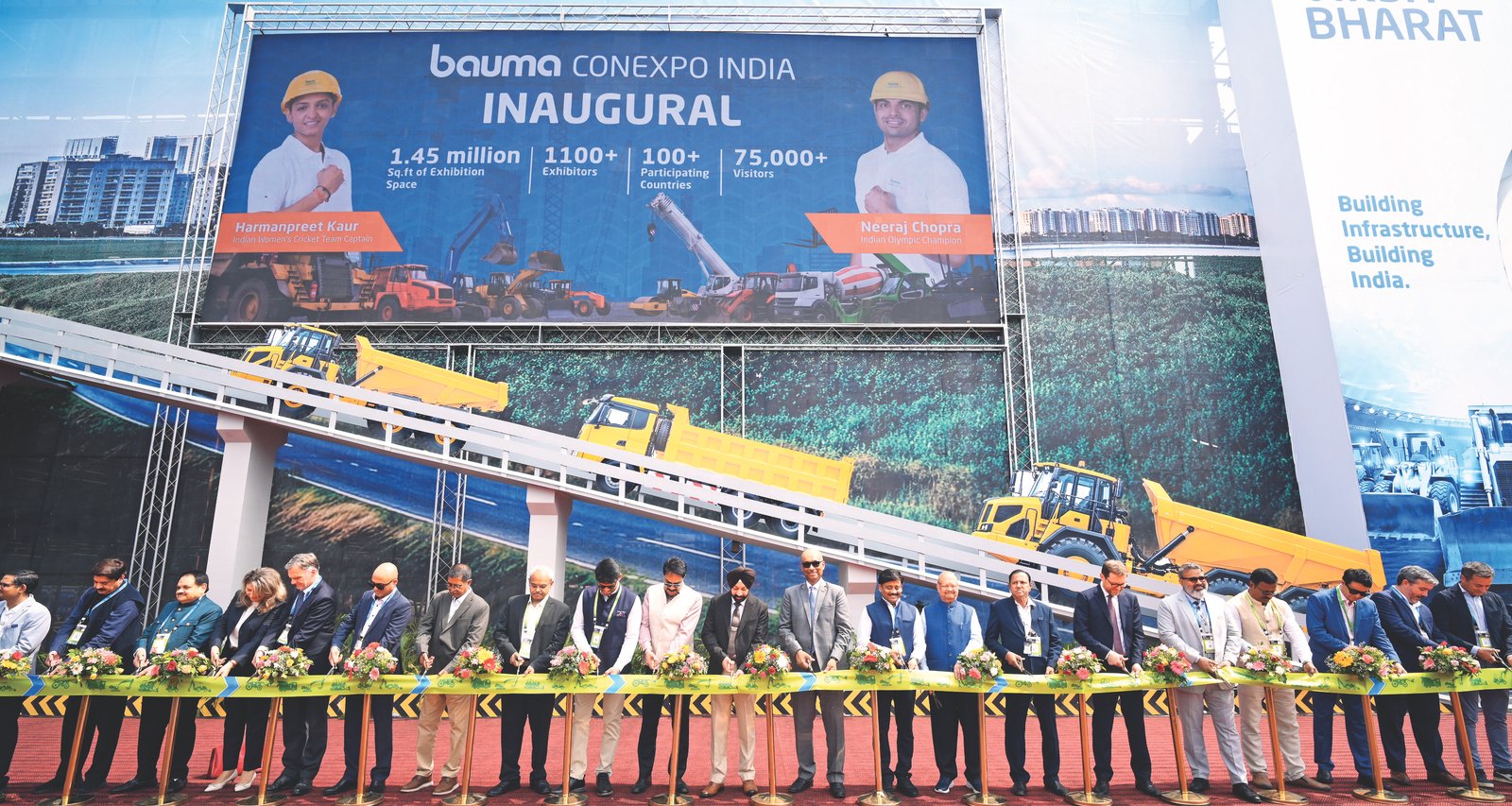
The four-day bauma CONEXPO INDIA 2026, held from 15 to 18 September, concluded at the India Expo Centre in Greater Noida against the backdrop of sustained government spending on expressways, urban redevelopment, and deep mineral extraction. According to research by MarketsandMarkets, the global heavy construction equipment market is valued at USD 160.11 billion in 2026 and projected to reach USD 226.91 billion by 2033 at a 5.1 per cent CAGR, with the Asia-Pacific region driving over 40 per cent of global demand. Within this footprint, reports from the Indian Construction Equipment Manufacturers Association (ICEMA) place India firmly as the world’s third-largest equipment market, valued at roughly USD 10 billion and on track toward its Vision 2030 goal of reaching the number two spot. While India typically sells between 130,000 and 140,000 machines annually, recent site activity has spiked significantly. According to data from the Federation of Automobile Dealers Associations (FADA), retail sales of construction equipment reached 6,486 units in September 2026, marking a 38 per cent increase over the 4,700 units sold in September 2025. The exhibition brought together over 1,100 brands and 59,004 industry visitors across 1.45 million square feet of display area. “India is on track to become the world’s second-largest construction equipment market by 2030. The country’s infrastructure growth is reflected in modern highways, high-speed rail and new airports. The industry is also shifting beyond mechanical excellence towards intelligence, electrification and digital connectivity,” Stefan Rummel, CEO, Messe München.

INDIA IS ON TRACK TO BECOME THE WORLD’S SECOND- LARGEST CONSTRUCTION EQUIPMENT MARKET BY 2030. THE COUNTRY’S INFRASTRUCTURE GROWTH IS REFLECTED IN MODERN HIGHWAYS, HIGH- SPEED RAIL AND NEW AIRPORTS.——- STEFAN RUMMEL,CEO, MESSE MUNCHEN
LIFETIME ECONOMICS
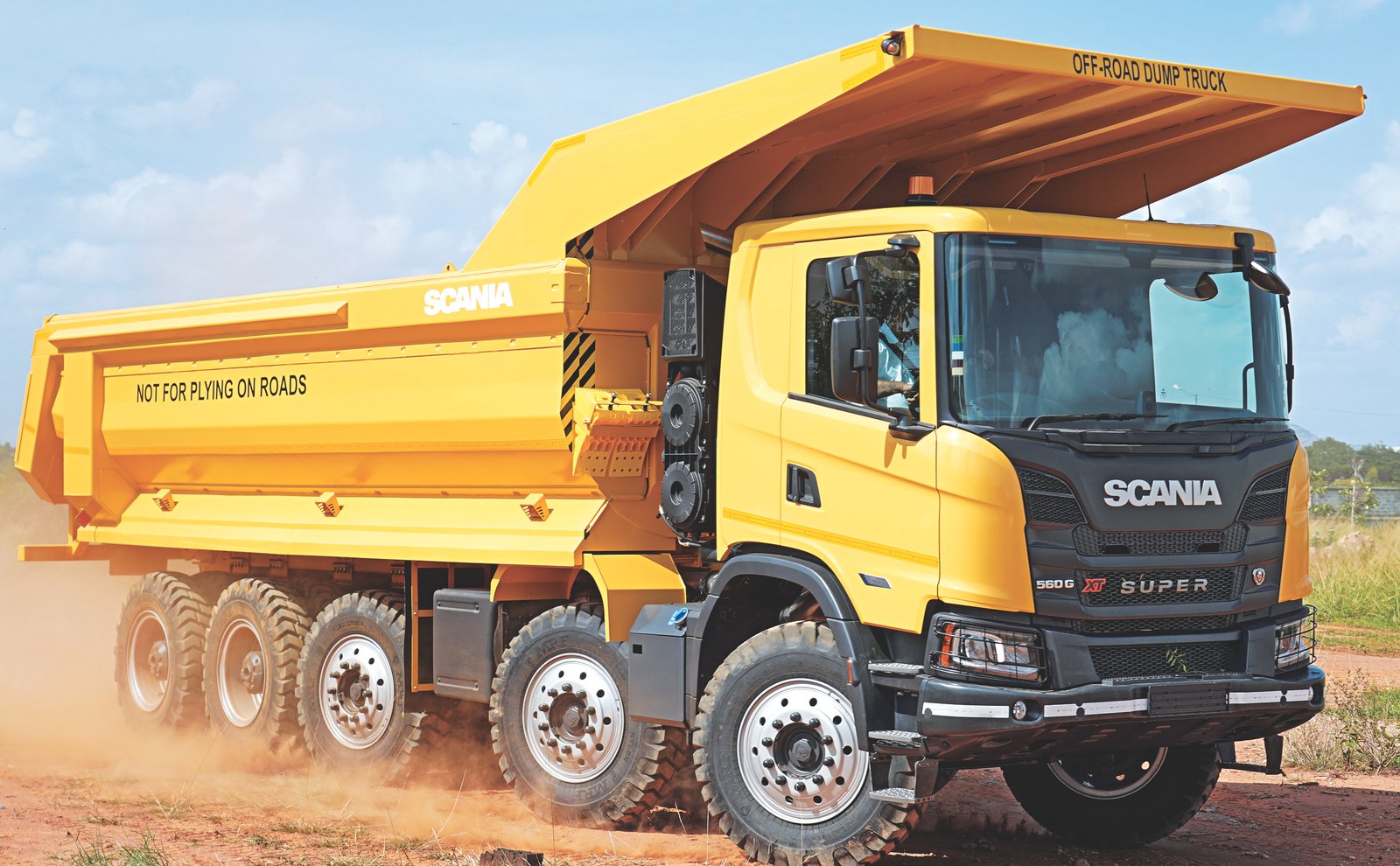
Manufacturers are shifting the focus from upfront equipment prices to Total Cost of Ownership (TCO) over five to ten years. “The India market is very price-oriented,” said Silvio Munhoz, Managing Director of Scania India. This calculation is critical in open-cast mining, where deeper surface benches require trucks to haul coal and ore over longer, steeper inclines. To address this segment, Scania Commercial Vehicles India unveiled its flagship G 560 Super 10×4 Mining Tipper, currently undergoing active customer field trials in India. Built for severe duty cycles, the tipper features a 71-tonne technical Gross Vehicle Weight (GVW) and a 32.5-cubic-metre SAE heap rock body fabricated from high-strength Hardox 450 steel. It is powered by a 13-litre engine delivering 560 hp and 2,800 Nm of torque, mated to a G33 Opticruise gearbox. To balance extreme payload with manoeuvrability on narrow mine haul roads, the truck incorporates three steerable axles alongside a liftable hydraulic tag axle that reduces tyre wear and drag during empty return trips.
JCB India is targeting maintenance and fuel costs through its excavator engineering. The Fuel Master 150 (150 FM) features a 0.75-cubic-metre bucket and claims an eight per cent improvement in fuel efficiency, translating to estimated annual savings of Rs. 1.2 lakh, with real-time fuel burn tracked on the dashboard. The JCB 225 XT incorporates a 1.1-cubic-metre bucket, delivering an estimated five per cent higher productivity per digging cycle. Its hydraulic regeneration system saves approximately Rs. 1.5 lakh in diesel costs annually. Extended hydraulic oil service intervals of 5,000 hours significantly reduce scheduled workshop downtime. Expanding its heavy-tonnage earthmoving footprint, JCB also showcased the 81 Eco+, NXT 215 Fuel Master, 345LC HD, and the flagship 520X LC, JCB India’s first 50-tonne-class excavator, generating 400 HP and handling bucket capacities up to 3.4 cubic metres. JCB also introduced the 18Z, a 1.8-tonne zero-tail-swing mini excavator featuring a retractable undercarriage that narrows to less than one metre. In agriculture and rural handling, JCB’s AGRIMAX 4WD tractor replaces locally modified, unsafe tractor-loader rigs. Built with a dedicated rigid frame, factory-fitted loader arm, synchro-shuttle transmission, and balanced counterweight, it lifts loads up to four metres without requiring a foot clutch. JCB also introduced the 320 HP 475-5 wheel loader, the G160QI CPCB IV-compliant generator, capable of synchronising two 160 kVA units, and the A60E electric articulated boom platform.
Beyond powertrains, machinery is becoming increasingly autonomous and digitally managed. Schwing Stetter India presented 27 concreting and construction equipment solutions, embedding AI, IoT connectivity, and intelligent machine control architectures across its range. V.G. Sakthikumar, Chairman and Managing Director of Schwing Stetter India highlighted the operational drivers behind these technologies, “AI, IoT, alternative power, intelligent controls and application-specific engineering are increasingly becoming part of how we develop equipment.” Schwing Stetter expanded its lineup with the camera-assisted high-pressure automated mixer washing system, eliminating the need for workers to enter drums for manual chiselling, and the SB 40 single-belt conveyor batching plant. Other launches included the SLM 4300 NEU self-loading mixer, DMM H30 dry mix mortar plant and AFDS-1000 automatic fibre dosing system. Its concrete pumping and tunnelling range featured the FBP 29 truck mixer pump, upgraded S 43 SX III boom pump, SP 1907 E electric stationary pump, LP 1807 D city line pump and TSR 22.11 shotcrete machine. The company also displayed the SCC 300 cone crusher, SJC 4232 jaw crusher and RM 60 Rubble Master impact crusher.
SANY India expanded its civil, port and access infrastructure portfolio with the SRSC45E3 electric reach stacker, SCP350C2 diesel forklift and SPT42 telescopic boom lift offering a 42-metre working height, alongside new electric scissor and articulating boom lifts. Its road and foundation equipment range included the STR90C-10 PRO soil compactor, tracked asphalt pavers, milling machines, asphalt batching plants and the SR185DW rotary drilling rig designed for challenging Indian geological conditions.
Component and body manufacturers are tackling haulage bottlenecks with dedicated hydraulics. Hyva (India) presented a range of commercial vehicle and mining solutions, with Abhijit Singh, Regional Manager – North (Retail Sales), detailing how dedicated hydraulics speed up haulage cycles and protect equipment. Hyva displayed its FC 169 and FC 191 front-end tipping cylinders built for 40–50 tonne and 60–70 tonne payloads, alongside its HD Pro series engineered for demanding mining applications, and new underbody and EF cylinders for light and medium commercial vehicles. Mirroring European logistics models, Hyva introduced a hydraulic landing leg for tractor-trailers, enabling a single tractor to drop an empty trailer and hook to a loaded unit in 30 to 40 seconds. The unit self-adjusts on uneven ground and supports a static load of 60 tons, 30 tonnes per leg. Hyvaintroduced an electromechanical covering system aligned with Directorate General of Mines Safety (DGMS) standards to halt material spillage during transit. For deep open-cast benches, the company deployed its Digital Tipping Solution (DTS), which uses an automatic tilt-stop mechanism to halt tipping if the vehicle is on an uneven gradient, avoiding rollovers. The hardware links directly to the cloud via the Hyva 1 EMS fleet management platform for remote operational oversight.
OPERATOR COMFORT
The most immediate change in construction and mining machinery is the focus on operator comfort. Deepak Shetty, CEO and Managing Director of JCB India, said cabin design is increasingly centred on the operator. “The more comfort you give to the operator, the more support you give to the operator to enable them to operate the machine in a better way,” he stated. JCB India has redesigned the cabin of its backhoe loader with electronic controls, a loader joystick, a digital display, wider brake pedals, adjustable lumbar support, improved air conditioning and USB charging ports. An automated ‘return to dig’ function resets the bucket angle, reducing repetitive manual adjustments. These ergonomic and mechanical updates anchor JCB’s updated backhoe loader lineup, comprising the 3DX, 3DX Plus, and 3DX Super, all powered by JCB’s 430 engine delivering 440 Nm of torque. JCB reported an overall 21 per cent improvement in fuel efficiency across its backhoe loader range in recent years.
Scania India is using telematics to improve driving practices in mining operations. Fitted within its G-Series cabs featuring smart displays, factory-fitted telematics track driving parameters, allowing the company to coach drivers using real-time data rather than relying solely on initial training. Silvio Munhoz, said the indicators help identify scope for improvement in reliability, fuel efficiency and safety.
SHIFT IN KEY SEGMENTS
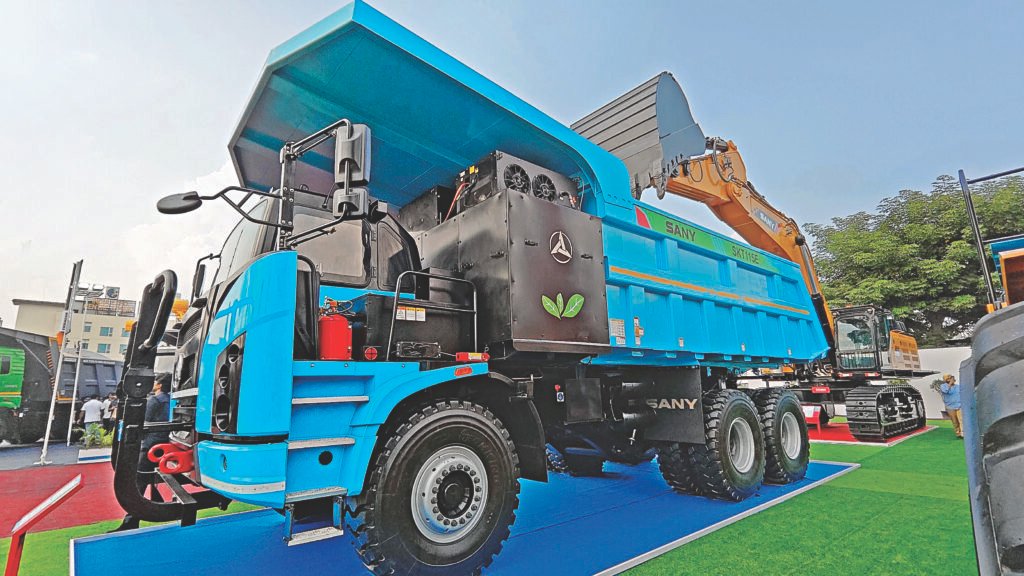
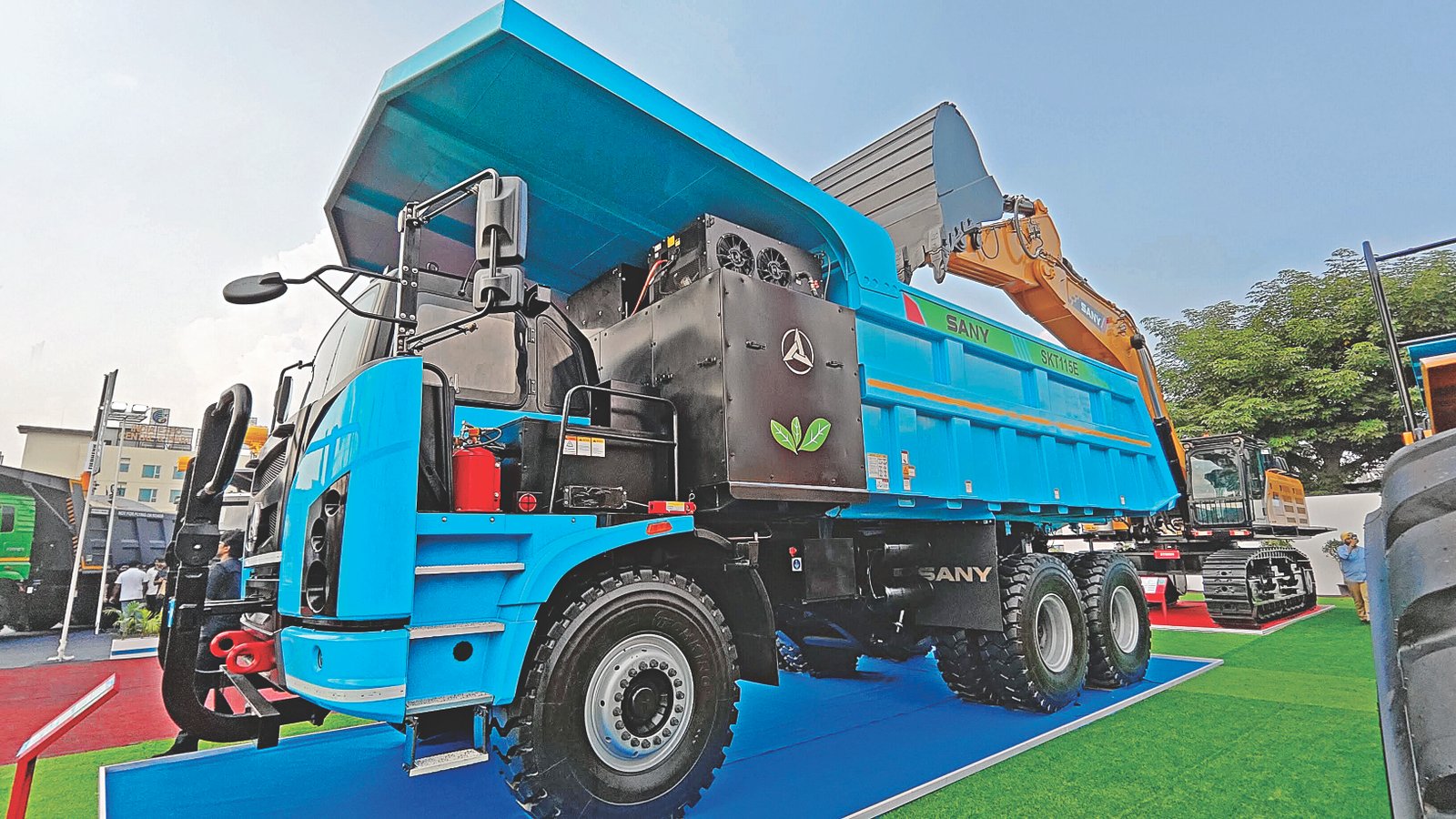
Wheel Loaders, Tractor Trailers and Mining Tippers see a big transition. There is deeper penetration, with the segment seeing higher electrification. Deepak Garg, Vice Chairman and Managing Director of SANY India, said battery-electric wheel loaders market share in India has grown from five to eight per cent to nearly 25 to 30 per cent. Garg said an electric excavator costs around 20 per cent as much to operate as its diesel equivalent. According to Garg, an electric wheel loader operating 11–12 hours daily can recover its additional upfront cost in less than a year through fuel savings, while an electric excavator reaches break-even in about two and a half years. SANY debuted the 5565E electric tractor and the 3555E electric tipper, both equipped with 462-kWh battery packs. It displayed the 70-tonne SKT 115E electric dump truck and the 7540E electric mining tipper, accompanied by the heavy SY900H mining excavator and the SW978K1 PRO-IN wheel loader. Sany also demonstrated cable-operated electric excavators that draw continuous power directly from fixed electrical lines, bypassing battery weight penalties and charging downtime on remote mining sites. The company debuted the SY215E electric excavator alongside two quarry-spec diesel units, SY215C-9LC and SY210C-9, while expanding material handling with the new SW936E electric wheel loader and the SW956E.
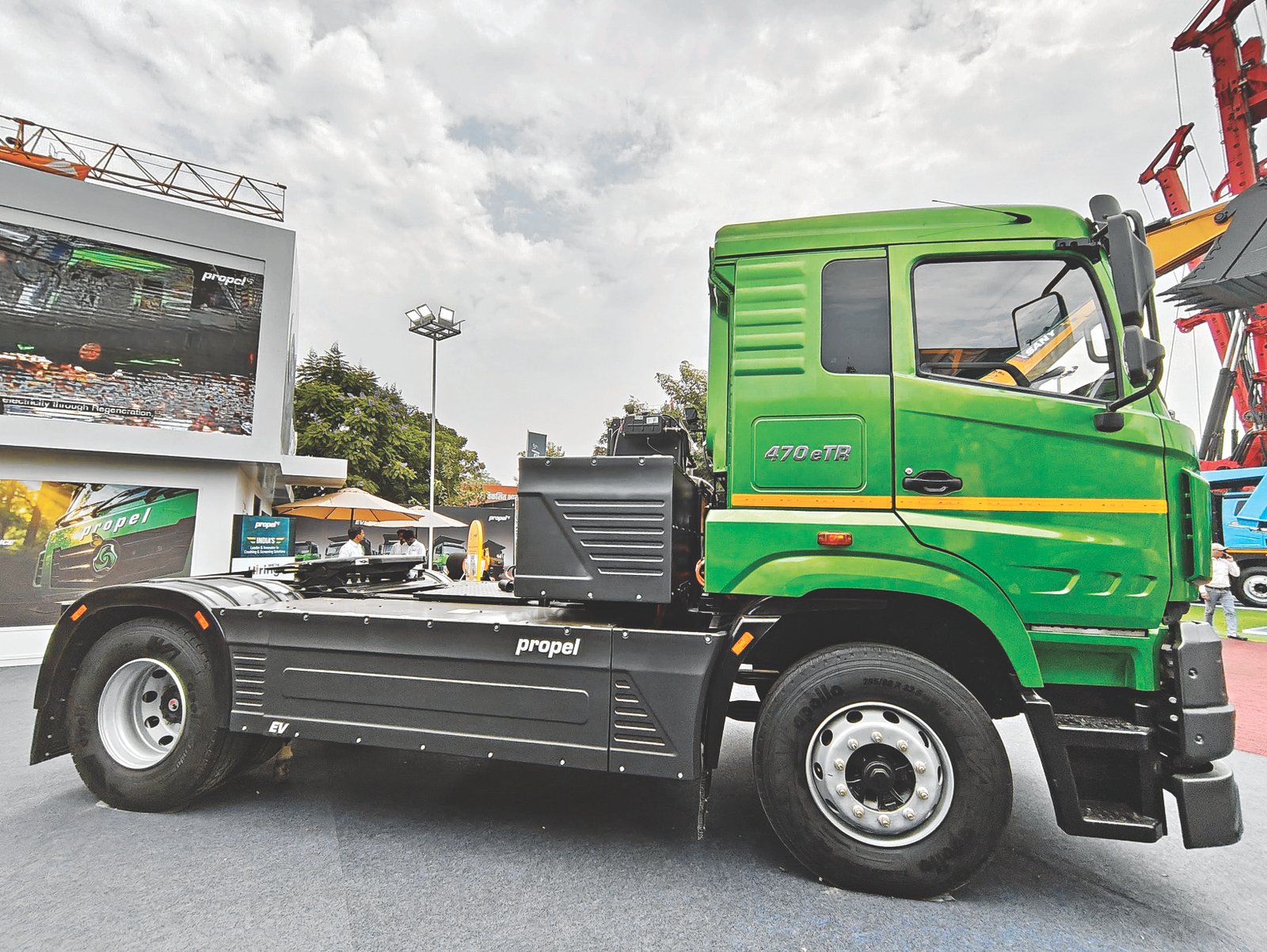
Propel Industries presented an expanding lineup of heavy electric trucks, with Virender Bhardwaj, Chief Operating Officer – EV Division, detailing fleet performance and customer cost savings. The company displayed a 55-tonne GVW 4×2 tractor fitted with a 385 kWh battery, an 8×4 470 HEV mining tipper with battery capacities up to 641 kWh, and a 6×4 470 MEV crusher tipper, alongside 70-tonne and 90-tonne dumpers. Propel offers over 15 variants tailored to specific battery sizes, body configurations, and haulage tasks. Addressing long-term ownership costs, Bhardwaj explained that switching to electric tippers delivers an estimated lifetime financial benefit of around Rs 2.5 crore compared to equivalent diesel trucks. The company has deployed more than 400 commercial electric vehicles across India, with early units surpassing 19,000 operating hours. Battery-electric trucks remain challenging for deep mining, where battery weight reduces payload, and frequent charging can affect productivity. “Scania India is instead exploring 20 per cent biodiesel blends for its combustion engines and developing gas engines suited to demanding off-road conditions,” said Munhoz. Electrification is also progressing slowly in concrete equipment. V.G. Sakthikumar, said adoption in India trails China, where he estimated that 85 per cent of transit mixers are electric, citing gaps in local battery and power-electronics supply chains.
EXPORT AMBITIONS
Manufacturers are leveraging economies of scale to establish India as a primary export hub for global supply chains. Schwing Stetter India has scaled its manufacturing footprint by adding 200,000 square feet to its existing 500,000-square-foot global hub in Cheyyar, Tamil Nadu, engineering products directly to US and European standards. In addition, it inaugurated a new 100,000-square-foot facility across a 10-acre site in Jamshedpur to partner directly with Tata Motors. Bolstered by Free Trade Agreements (FTAs), Schwing Stetter now exports 10 per cent of its revenue to the UK, Canada, Australia, the US, Africa, and the Middle East. JCB India exports Indian-built machinery to more than 135 countries worldwide, while scaling regional shipments of machines like the AgriMax across SAARC nations. SANY India operates its major manufacturing and engineering centre in Chakan, Pune, building excavators, cranes, and road equipment for domestic infrastructure and global export markets. Scania India has consolidated its Indian operations, ending bus bodybuilding in India and Poland to focus its local facility exclusively on assembling heavy-duty rolling chassis for outside tipper and specialist bodybuilders.
OFF-HIGHWAY TYRES & HIGH-TORQUE ENGINEERING
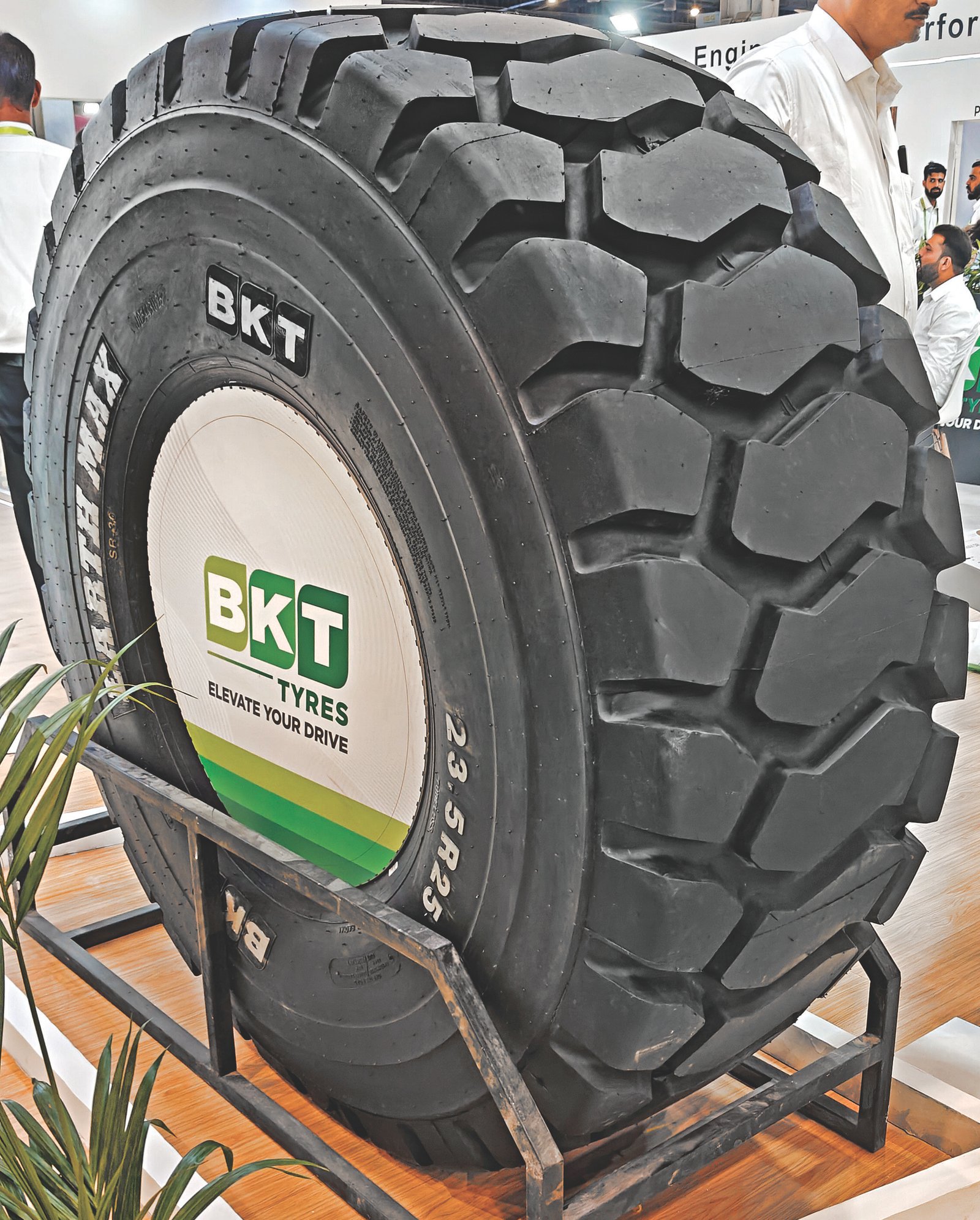
The rapid shift toward high-torque electric commercial vehicles and deep-pit mining is altering demands on consumable components, particularly Off-Highway Tyres (OHT). BKT presented its application-specific off-highway tyre portfolio. The company displayed tyres developed for demanding construction, mining and industrial applications. The range included the Earthmax SR 30 for loaders and articulated dump trucks, and the Airomax AM 27 for mobile cranes, designed to offer stability and load-carrying capability. Other products on display included Mine Force, EarthmaxExperto GD1, XL Grip Neo, Dyna Haul, Consteer and Earthmax SR423.
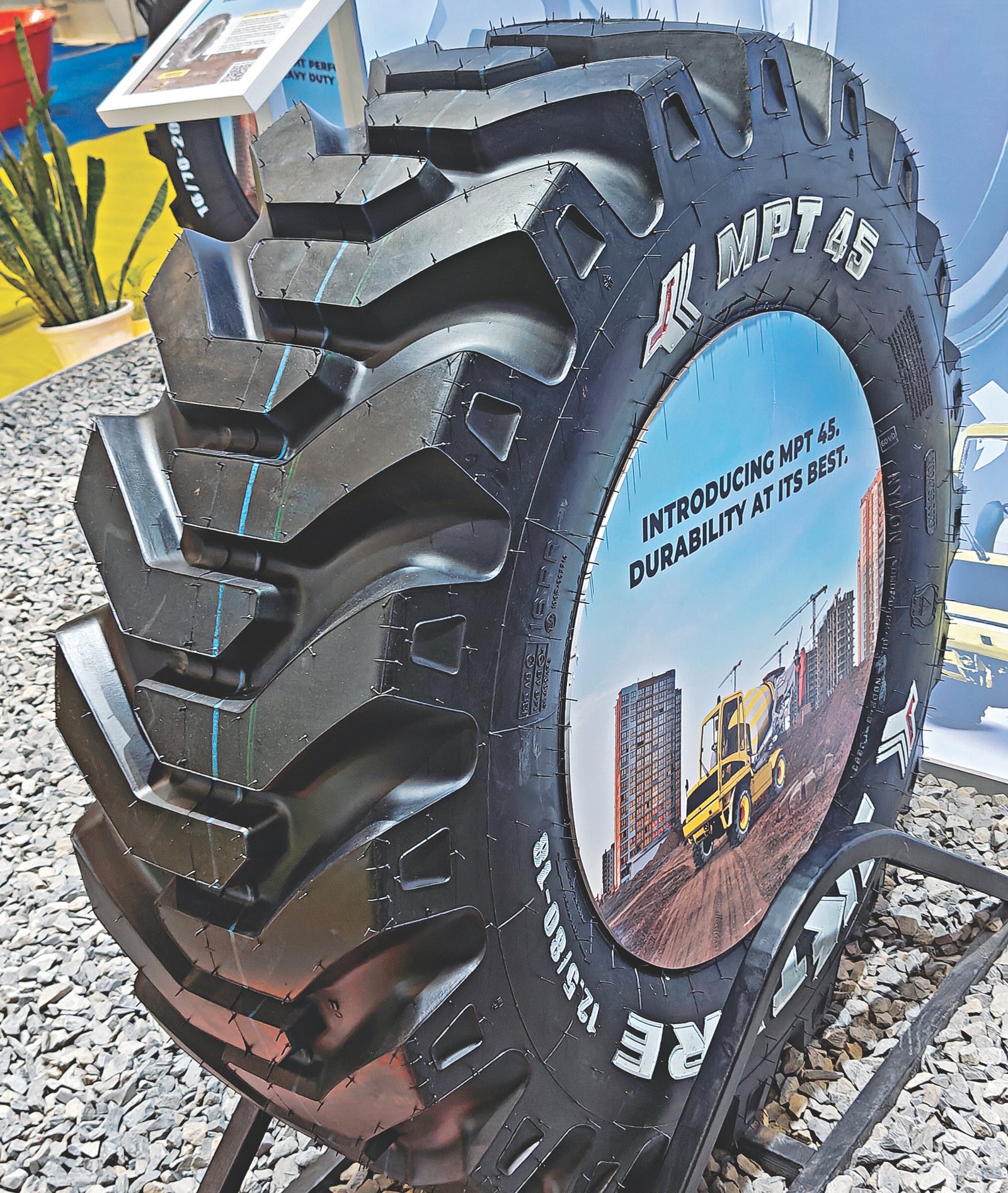
JK Tyre introduced products include 12.5/80-18 MPT 45 16PR TL for Self-Loading Concrete Mixers (SLCM) and backhoe loaders, 16/70-20 MPT117 14PR TL for SLCM and Telehandler applications, 18-19.5 MPT117 18PR TL for SLCM applications, and 12.00R20 JDO XD OTR 22PR 156/153F TT for mining tippers. Addressing the off-highway tyre market, Ashish Pandey, Senior Vice President (OHT & International) at JK Tyre & Industries Ltd., explained that tyre engineering is adapting directly to the rise of electric commercial vehicles. Because electric drivetrains deliver instant maximum torque, they accelerate tread wear significantly faster than internal combustion engines. Pandey estimated that keeping pace with OEM expansion and national infrastructure growth will require JK Tyre to expand manufacturing capacity by 25 per cent every three to four years. Birla Tyres outlined its revival and product expansion strategy under Chairman and Managing Director Anurag Choudhary, with Rajeev Kumar, Vice President – Global Sales & Marketing, detailing the company’s progress. Birla Tyres has re-entered the market with more than 90 product sizes (SKUs) in ten months and plans to expand the portfolio to over 300 SKUs next year. Key offerings include the heavy-duty XTL and XTR ranges, Agri Plus products, and earthmover fitments such as the 14.00-25 and 16.9-28 Loader Max. The company has sold over 200,000 units in the domestic market in the current financial year and aims to increase its market share from four per cent to 10 per cent, targeting the position of India’s second-largest off-highway tyre manufacturer. Its products use high-grade polymers and stepped-groove tread block profiles designed to eject sharp stones, reduce crown punctures and improve braking stability. Kumar also pointed to the financial benefits of disciplined tyre maintenance, stating that maintaining the recommended inflation pressure can extend tyre life by 20 to 30 per cent.
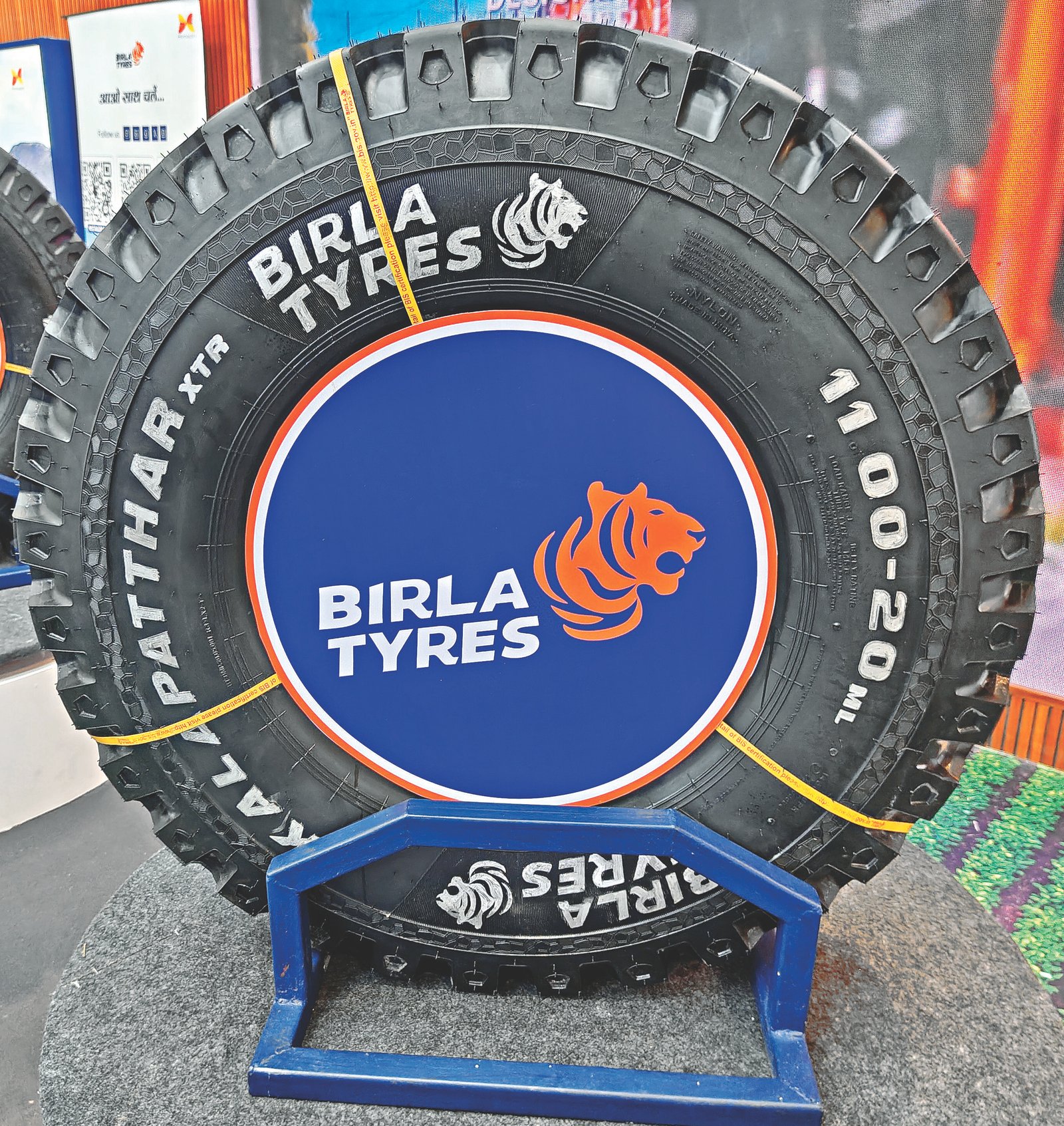
Kalapatthar XTR ( ML) for Tipper Trucks