

From electric trucks to global trade, SIAM’s 66th Annual Convention addressed the challenges shaping India’s automotive industry, Richa Tyagi writes.
India’s automotive industry is entering a period in which technological development, energy security, manufacturing competitiveness and access to global markets will shape its next phase of growth. These issues formed the central agenda of the 66th SIAM Annual Convention, which brought together policymakers, industry executives and mobility stakeholders to discuss the sector’s contribution to India’s economic development and its transition towards cleaner mobility.
In an official message conveyed to the convention, Prime Minister Narendra Modi pointed to the structural transformation taking place across the country’s transport landscape. He stated that the automotive sector is well placed to expand its global presence by maintaining sustained investment in engineering quality, indigenous research, and manufacturing standards. The Prime Minister connected this industrial development directly to national highway upgrades, noting that the expansion of access-controlled expressways and dedicated freight corridors is fundamentally altering logistics economics. Higher operational transport speeds reduce turnaround cycles, mitigate freight damage, and lower input costs for component plants and vehicle assembly lines.
He also directed attention to administrative measures structured to improve the ease of doing business, including the elimination of redundant statutes and the reduction of compliance burdens. These procedural modernisations, combined with Production Linked Incentive (PLI) frameworks and bilateral Free Trade Agreements, provide domestic manufacturers with a foundation to participate in overseas value chains. For Indian vehicle makers, the task now involves leveraging these trade agreements to establish reliable export channels while upgrading factory standards to satisfy international emissions and safety benchmarks.
LOCALISATION AND EXPORTS
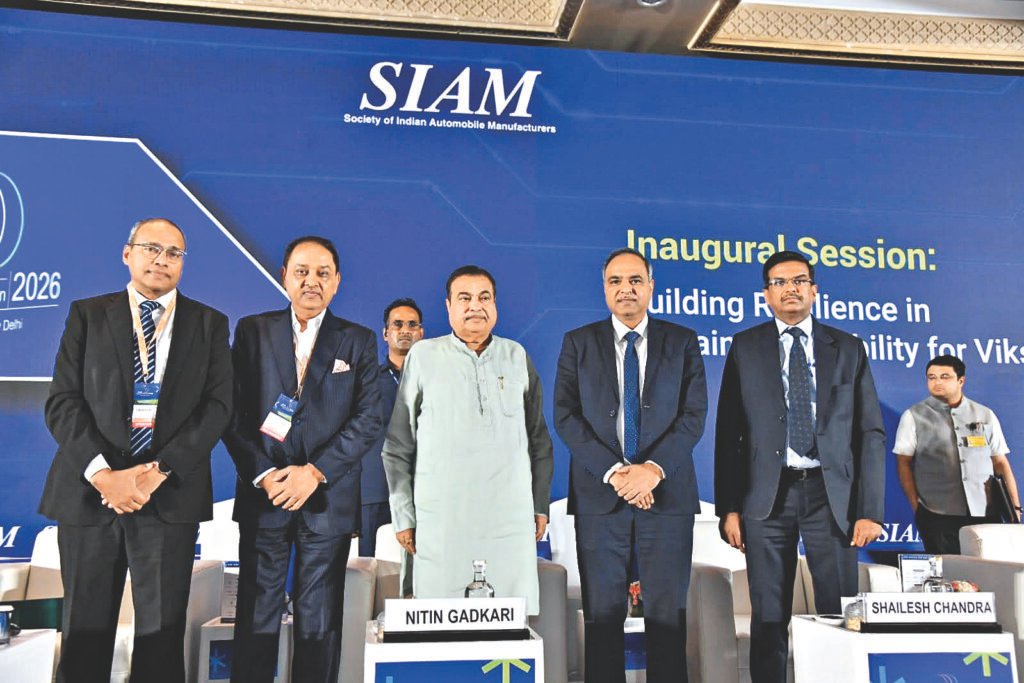
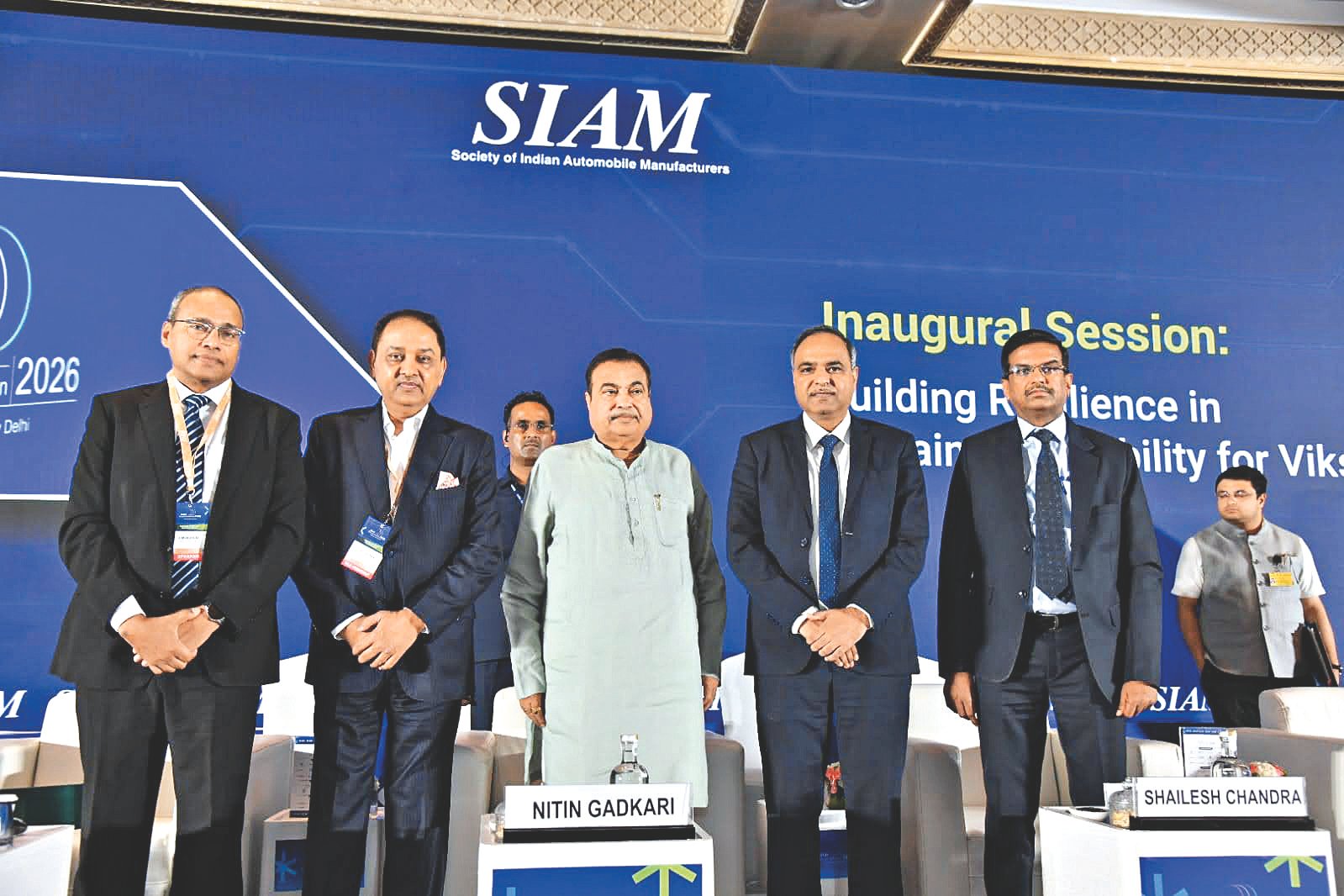
Addressing delegates as Chief Guest, Nitin Gadkari, Union Minister of Road Transport and Highways, GOI stated that India holds the structural potential to become the preeminent automobile manufacturing hub globally, provided domestic firms focus on quality assurance, indigenous research, and competitive pricing. Gadkari broadened the scope of industrial planning beyond vehicle assembly, identifying driver training academies, automated vehicle fitness inspection lanes, and registered vehicle scrapping facilities as essential economic drivers. A modern automotive ecosystem relies on competent commercial drivers and verifiable vehicle roadworthiness to maintain highway safety, while scrapping infrastructure recovers crucial industrial feedstocks like scrap steel, copper, and aluminum to feed secondary manufacturing loops.
In a video message, H. D. Kumaraswamy, Union Minister of Heavy Industries and Steel, GOI said the industry was building domestic capabilities and advancing vehicle technologies. He noted that this could support the development of India as a manufacturing and technology hub while contributing to the Viksit Bharat 2047 objective.
Shailesh Chandra, then President, SIAM, and Managing Director and CEO, Tata Motors Passenger Vehicles Ltd., spoke about collaboration between the automotive industry and the government across electric mobility, CNG and LNG, vehicle recycling, green hydrogen, road safety and localisation.
One of the figures presented during the convention was a 16.6 per cent decline in automotive imports in FY2024-25 compared with the FY2019-20 baseline, translating into a reduction of more than Rs. 20,000 crore. The change points to the role of domestic manufacturing and localisation in reducing dependence on imported products. However, sustaining this trend will require Indian suppliers to develop capabilities in advanced electronics, powertrain systems, materials and other technologies that are increasingly important to modern vehicles.
The policy framework for this transition includes PLI schemes for automobiles and auto components, support for advanced chemistry cell manufacturing, the PM E-DRIVE scheme, incentives for manufacturing electric passenger cars in India and the initiative for sintered rare-earth permanent magnets.
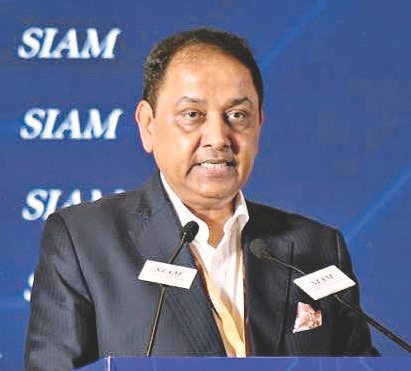
MANUFACTURERS AND SUPPLIERS MUST CONVERT POLICY SUPPORT INTO COMPETITIVE PRODUCTS,STRONGER DOMESTIC SUPPLY CHAINS AND TECHNOLOGIES THAT MEET INDIAN REQUIREMENTS AND INTERNATIONAL STANDARDS. ——- SHENU AGARWAL, President, SIAM
Shenu Agarwal, President, SIAM, and Managing Director and CEO, Ashok Leyland, referred to these programmes as part of the policy support available to the industry as it develops electrified mobility. He also discussed SIAM’s engagement with the Ministry of Road Transport and Highways on vehicle safety, emissions, fuel efficiency, alternative fuels and vehicle scrappage. For manufacturers and suppliers, the challenge is to translate policy support into competitive products, stronger domestic supply chains and technologies that can meet both Indian requirements and international standards.
SAFTEY AND TECHNOLOGY
R. Mukundan, President, Confederation of Indian Industry, and Managing Director and CEO, Tata Chemicals Ltd., discussed the growth in the industry’s production base. According to figures cited at the convention, annual vehicle production increased from 22.7 million units to 34.7 million units over five years. The sector supports approximately 30 million direct and indirect jobs. India is the world’s largest market for two-wheelers and three-wheelers and ranks among the largest markets for passenger and commercial vehicles. However, the industry’s next phase will depend increasingly on its ability to develop and integrate new technologies rather than on production volumes alone. Software, electronics, connected systems, artificial intelligence, alternative powertrains and advanced safety features are becoming integral to vehicle development. This is changing the capabilities required from manufacturers and component suppliers, including expertise in software development, data management, electronics, systems integration and testing.
Ramakrishnan called for world-class safety to become a core industry priority. This is particularly relevant as vehicles become more connected and technologically complex, requiring manufacturers to consider functional safety, cybersecurity, driver assistance and the reliability of electronic systems alongside conventional mechanical performance. Indian manufacturers are investing in electric and hybrid technologies, alternative fuels, connected platforms, advanced safety systems and next-generation manufacturing. Their ability to manage these changes simultaneously will influence the pace at which the domestic industry can compete with established global automotive centres.
POWERTRAINS CHOICES
The convention’s discussions on powertrains indicated that the transition to cleaner mobility is unlikely to follow a single technological route across all vehicle categories. V. Umashankar, Secretary, Ministry of Road Transport and Highways, GOI, said the industry faced a more complex set of fuel and powertrain choices than it did a decade ago. Continued engagement between government and industry will be necessary to evaluate these options and determine the most suitable pathways for different applications.
He also identified logistics efficiency as a major factor in India’s future competitiveness. Higher payload-to-weight ratios can improve the amount of freight carried relative to the vehicle’s own weight, potentially reducing the number of trips required for a given volume of cargo. He called for a broader assessment of the logistics ecosystem, including trucking speeds, expressway utilisation and overall freight movement. For commercial vehicles, these questions are closely connected to total cost of ownership, vehicle utilisation, fuel or energy costs, payload and maintenance. Improvements in these areas can affect fleet productivity and the cost of moving goods across the country.
Umashankar also said the government’s PARIVARTAN scheme for commercial vehicles in Delhi-NCR was gaining momentum and could change the segment in the region.
Electric mobility was another major area of discussion. Kamran Rizvi, Secretary, Ministry of Heavy Industries, GOI, said electric three-wheelers had progressed beyond the sector’s earlier expectations, with EVs accounting for around 50 per cent of three-wheeler sales. He said the share could potentially reach 75 per cent over the following two to three years.
Rizvi traced the development of electric mobility policy from FAME I, which focused partly on creating awareness, to FAME II and subsequent measures covering vehicle adoption, manufacturing and battery technology. Support for advanced chemistry cells and rare-earth permanent magnets is also intended to strengthen domestic capabilities.
He said the industry needed to shorten the time required to catch up with established technology leaders and move towards developing its own technologies. This places greater importance on domestic research and development, engineering capabilities and the ability to commercialise innovations. The next stage of electrification, however, will require attention to segments where adoption presents different technical and economic challenges.
ELECTRIFYING HEAVY VEHICLES
Tarun Kapoor, Advisor to the Prime Minister, GOI, said the transition needed to extend beyond two-wheelers and passenger cars to trucks and buses. These segments will require solutions suited to higher vehicle weights, longer operating hours, demanding duty cycles and the need to minimise downtime.
Kapoor identified electric mobility, biofuels and green hydrogen as possible routes to reduce India’s dependence on imported energy. He also called for stronger domestic battery manufacturing, lower technology costs, improved financing, dependable charging infrastructure and the development of battery-swapping and highway-charging networks. Large fleet operators in mining, coal and government-linked operations could provide early markets for cleaner heavy vehicles. Their operations may offer defined routes or concentrated deployment environments in which technology performance and operating economics can be assessed at scale.
Kapoor argued that the industry should move beyond limited pilot projects involving a few hundred trucks towards deployment plans capable of scaling to thousands of vehicles and eventually much larger volumes. This would require coordinated investment in vehicles, energy infrastructure, financing and service support. The economics of electric commercial vehicles will depend on more than the purchase price. Battery costs, charging time, energy tariffs, residual values, payload implications, financing rates and vehicle utilisation all influence fleet decisions. For long-distance trucks, charging availability along freight corridors and the ability to maintain schedules will be particularly important. Kapoor also pointed to energy security, foreign exchange outflows and uncertainty in global supply chains as reasons to make greater use of domestic resources. He called for closer government-industry coordination and said the objective should be a substantial change in the mobility landscape over the next five years rather than incremental progress alone. Piyush Goyal, Union Minister of Commerce and Industry, GOI, similarly called on the automotive industry to prioritise technology adoption, research and development, skill development and talent. He cautioned against relying on selective statistics in debates over EVs, hybrids and alternative powertrains, arguing that decisions should be guided by innovation, competitiveness and India’s long-term interests.
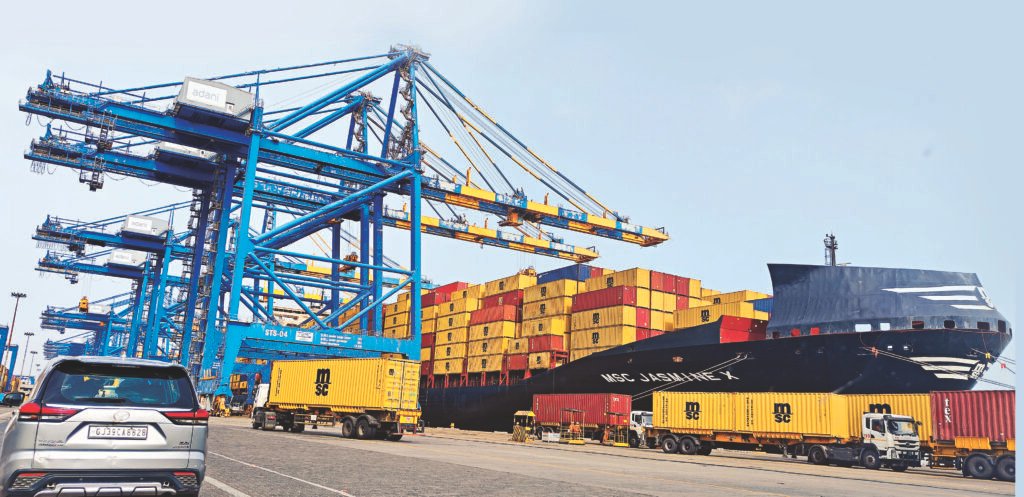
Goyal also pointed to the industry’s growing export presence and the potential to expand it further. As trade agreements create access to new markets, manufacturers will need to align products with international requirements, improve quality and establish reliable supply chains.
BUILDING RESILIENCE
Special Plenary Session 3, themed ‘Building a Resilient Auto Industry Ecosystem for India’, examined the role of international partnerships in improving the sector’s competitiveness. Sudhakar Dalela, Secretary (Economic Relations), Ministry of External Affairs, GOI, said technology, investment, components, talent and customers increasingly operate across national borders. He identified trusted international partnerships as important to building resilience, expanding market access and enabling Indian companies to compete globally.
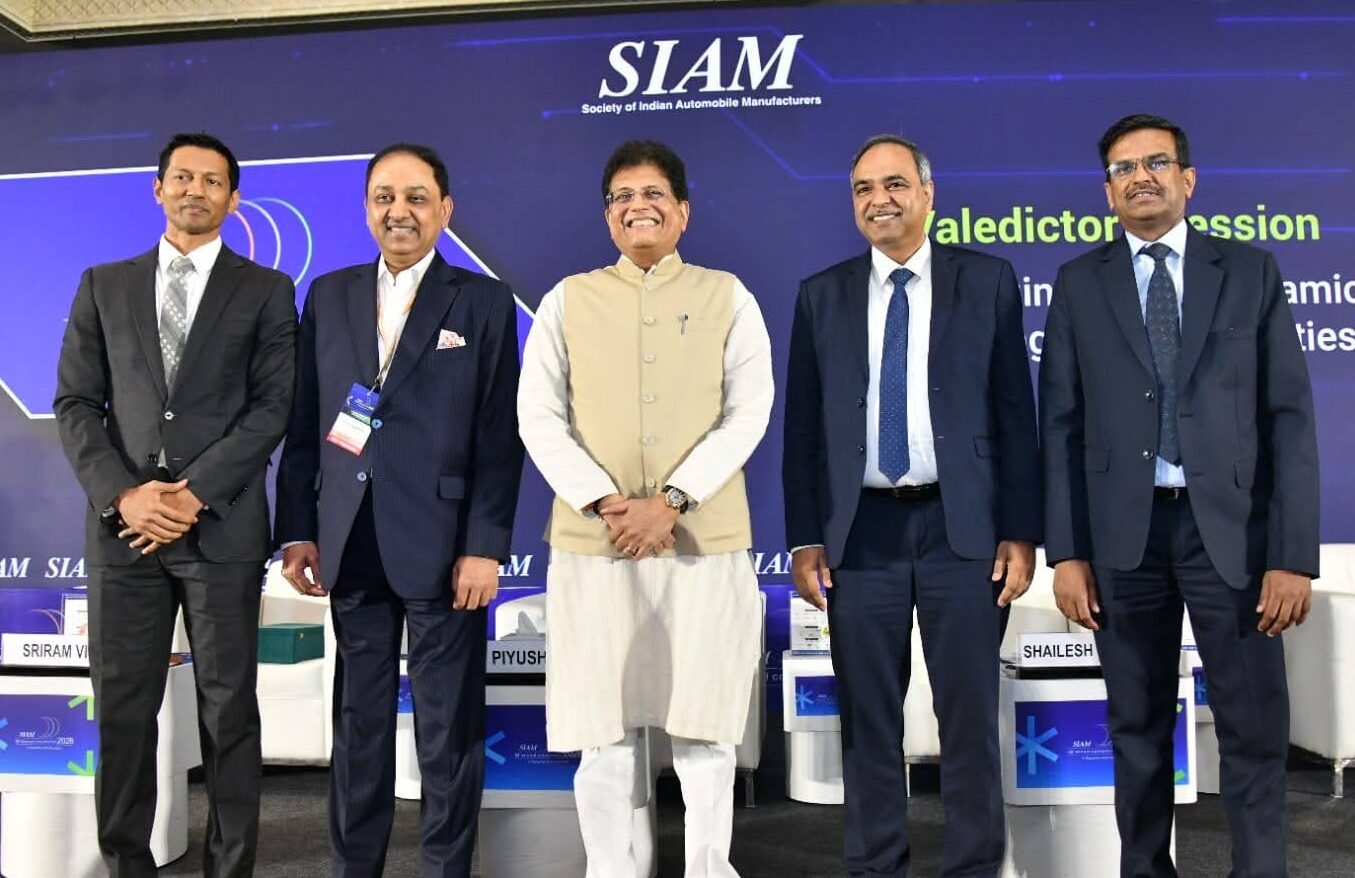
Anurag Jain, CEO, NITI Aayog, GOI, said ongoing reforms created opportunities for India to participate more extensively in global value chains. He called for continued technological development, stronger domestic capabilities and sustained attention to competitiveness in international markets. Resilience in this context involves more than reducing imports. It also requires access to critical technologies, diversified sourcing, skilled personnel, competitive component manufacturing and the ability to respond to changes in global demand and trade policy. The convention’s valedictory session returned to exports, trade agreements and India’s position in the global automotive market. Goyal said the Bharat Mobility Global Expo had created momentum for the industry and called for higher export targets as India expanded its trade relationships. He also referred to the ‘4Ms’, Molecule, Module, Megawatts and Markets, as areas through which India could develop international partnerships and strengthen its industrial base. In his concluding address, Sriram Viji, President Designate, ACMA and Managing Director, Brakes India Pvt. Ltd., highlighted the key takeaways from the Convention and the way forward for India’s automotive industry.