

Longer ranges, megawatt charging, and a growing choice of electric heavy- trucks point to maturity in zero- emission freight technology.The realities of daily operations of 20 handpicked eHCVs will determine how close the industry comes to its tipping point, Ashish Bhatia writes.
As the industry considers when electric heavy-duty commercial vehicles will truly achieve scale, fundamental practical challenges persist. Fleet managers still scrutinise whether a battery-electric vehicle can handle an entire shift, maintain an acceptable payload despite heavy energy-storage systems, replenish energy seamlessly within tight delivery windows, and deliver a convincing business case against conventional diesel. Yet the tone markedly shifted during the IAA Transportation event in Hannover. Truck manufacturers showcased heavy-duty hauliers geared for regional distribution and long-distance routes, highlighting advertised operating ranges approaching 700 km, multi-hundred-kilowatt power acceptance, and rapidly expanding readiness for megawatt charging standards.
MAN’s latest eTGX, Renault Trucks’ E-Tech T 780, Volvo Trucks’ new heavy-duty electric offering and BYD’s electric tractor illustrate how established manufacturers and newer challengers are approaching the same challenge from different directions. SANY’s arrival with a broad European electric-truck portfolio adds another dimension, while Tesla’s Semi continues to represent a distinct North American approach to battery-electric long-haul freight even as the buzz around the cold thrusters on its Roadster refuses to fizzle out.
But has the tipping point arrived? Not quite. A manufacturer’s maximum range is not necessarily the distance a fully laden truck can cover in every operating condition. A charger rated at 1 MW is of little help if it is unavailable on the route. And a vehicle that reduces energy costs may still struggle to make the business case if its purchase price, payload penalty or financing costs remain high.
The more useful question is whether the industry is assembling the pieces needed to make electric heavy-duty transport repeatable, scalable and commercially compelling.
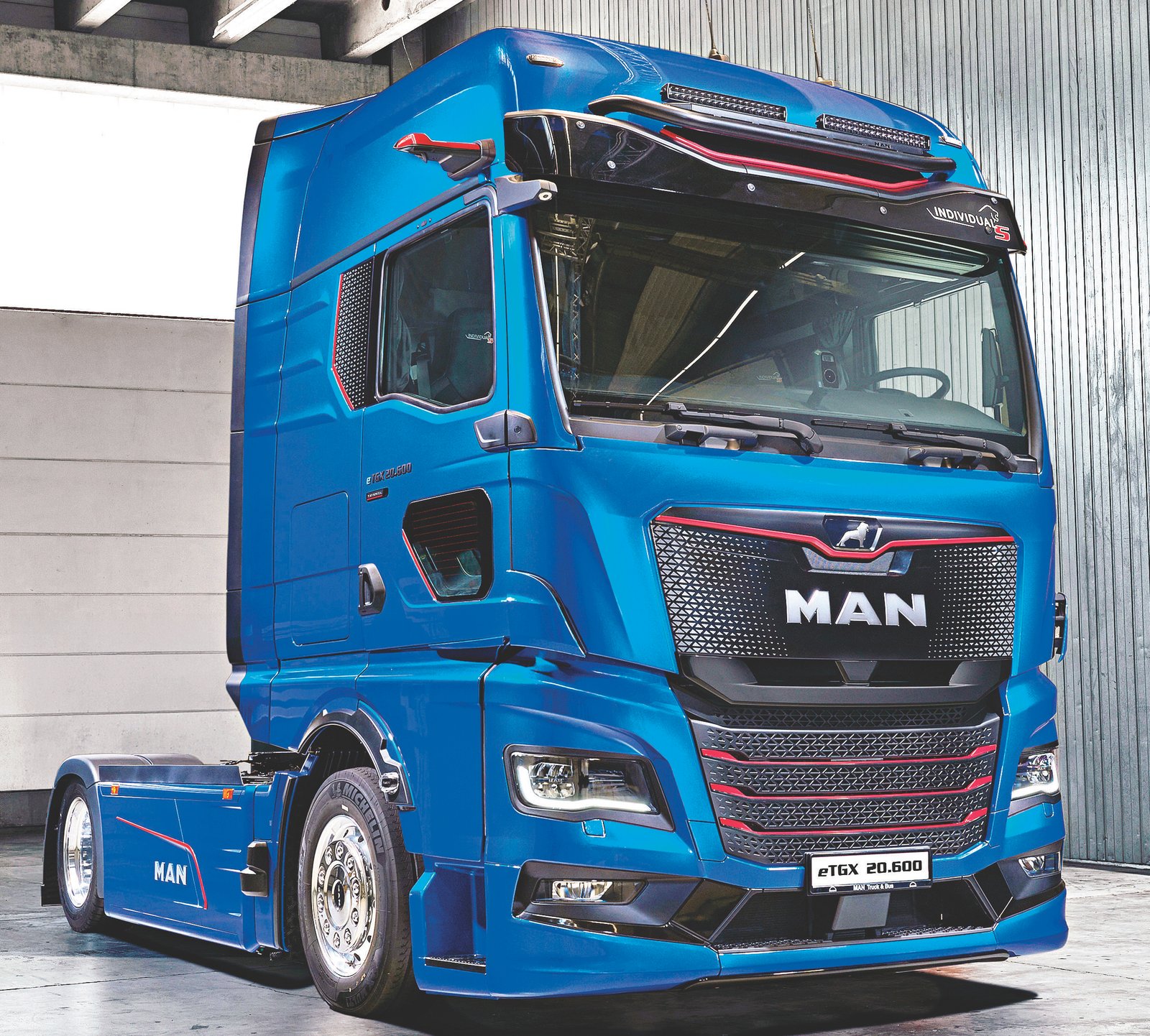
MAN eTGX:720 KM
MAN’s new eTGX is among the clearest illustrations of how rapidly the long-haul proposition is evolving. The latest 6×2 tractor configuration, with a seventh battery, offers a total battery capacity of 644 kWh and a claimed range of up to 720 km. MAN attributes the improvement to a new battery generation, enhanced energy recovery and aerodynamic refinements. The manufacturer also cites a payload of up to 25 tonnes for a standard semi-trailer combination. The range figure is significant, but so is the attempt to make the truck more efficient without compromising its usefulness as a working vehicle. MAN is also offering Megawatt Charging System (MCS) capability of up to 750 kW.
RENAULT TRUCKS E- TECH T 780:660 KM
Renault Trucks has taken a different route to extending range. The E-Tech T 780 combines an electric axle with high-energy-density nickel-cobalt-aluminium batteries, offering a claimed range of up to 660 km and payload capacity of up to 27.4 tonnes. Its MCS charging capability reaches 700 kW. The company says analysis of connected-vehicle data suggests that 80 per cent of daily freight objectives can be completed by its new electric portfolio, increasing to 90 per cent when a 45-minute fast charge is incorporated into the operating day. These are manufacturer-derived findings, rather than a guarantee for every route, but they move the debate towards actual duty cycles.
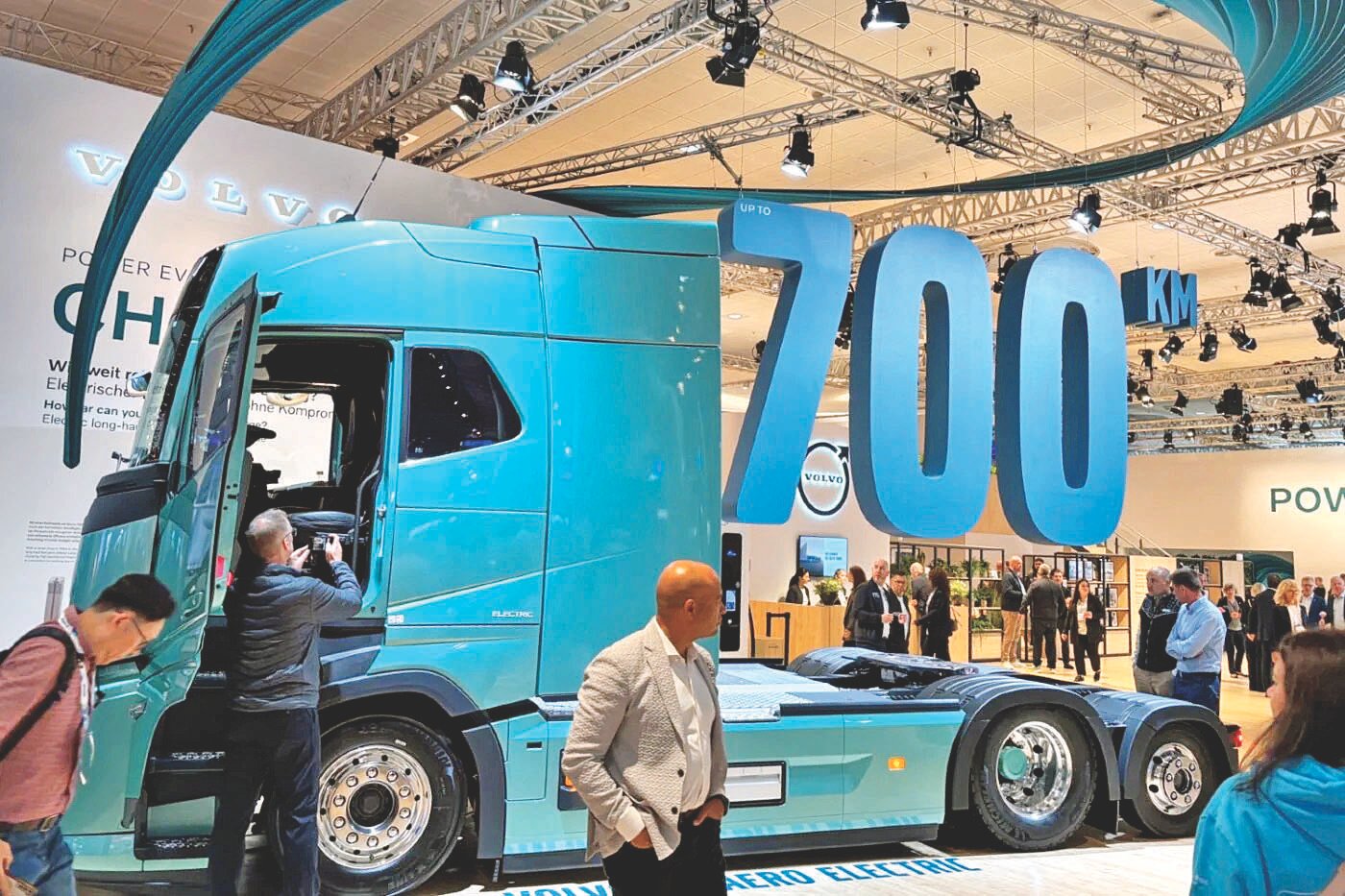
Volvo FH ELECTRIC AND FH AERO ELECTRIC:UP TO 80 TONNES GCW
Volvo Trucks is extending battery-electric operation into heavier combinations. Its new electric FH and FH Aero variants are designed for Gross Combination Weights (GCW) of up to 80 tonnes. Volvo claims up to 450 km at 64 tonnes, reducing to approximately 420 km at 74 or 76 tonnes. The new configuration has 640 kWh of usable battery capacity and MCS charging capability of up to 680 kW.
The vehicles are scheduled to launch in early 2027, initially in selected European markets. This is therefore an announced future product rather than an established fleet-wide solution, but its target operating weight is important for heavier transport assignments.
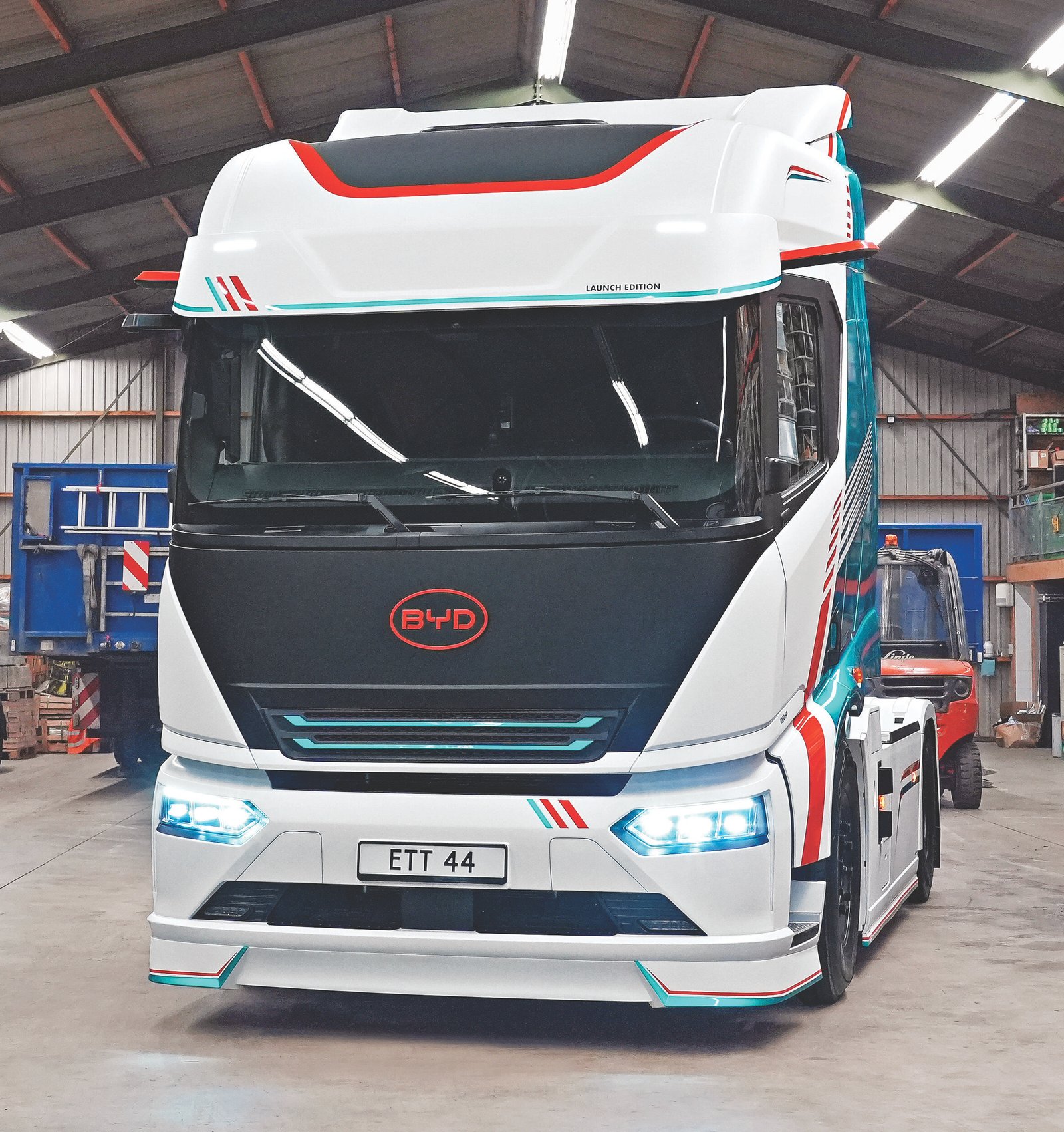
BYD ETT 44: 600 KM
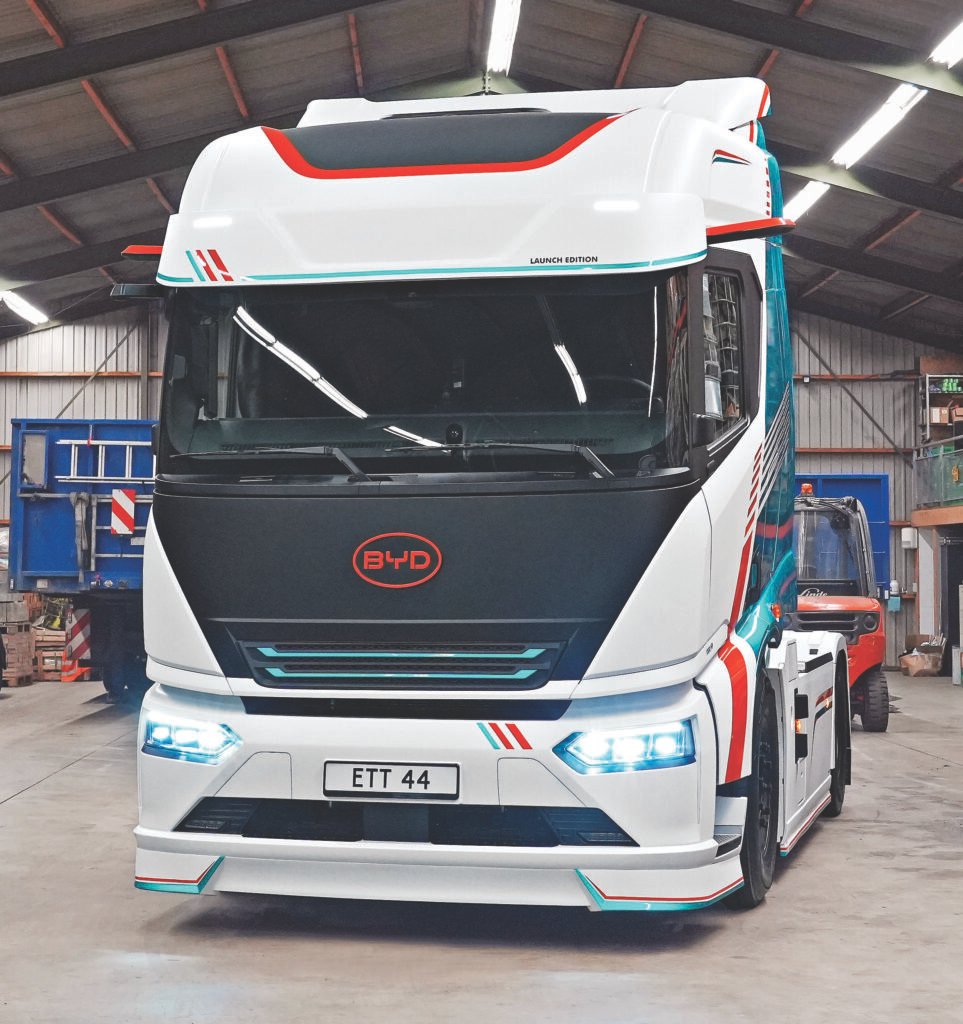
BYD’s ETT 44 electric tractor combines a claimed range of up to 600 km with a 651 kWh Blade Battery and a headline charging proposition of up to 1.5 MW. The company says the truck can charge from 20 to 80 per cent in around 20 minutes under the specified conditions, potentially recovering up to 400 km of range. That combination makes BYD one of the most interesting challengers in the long-haul discussion. The important qualification is that such charging performance depends on compatible infrastructure, battery conditions and the charging curve. A vehicle’s peak charging rating should not be mistaken for the power it will sustain throughout the entire charging session.
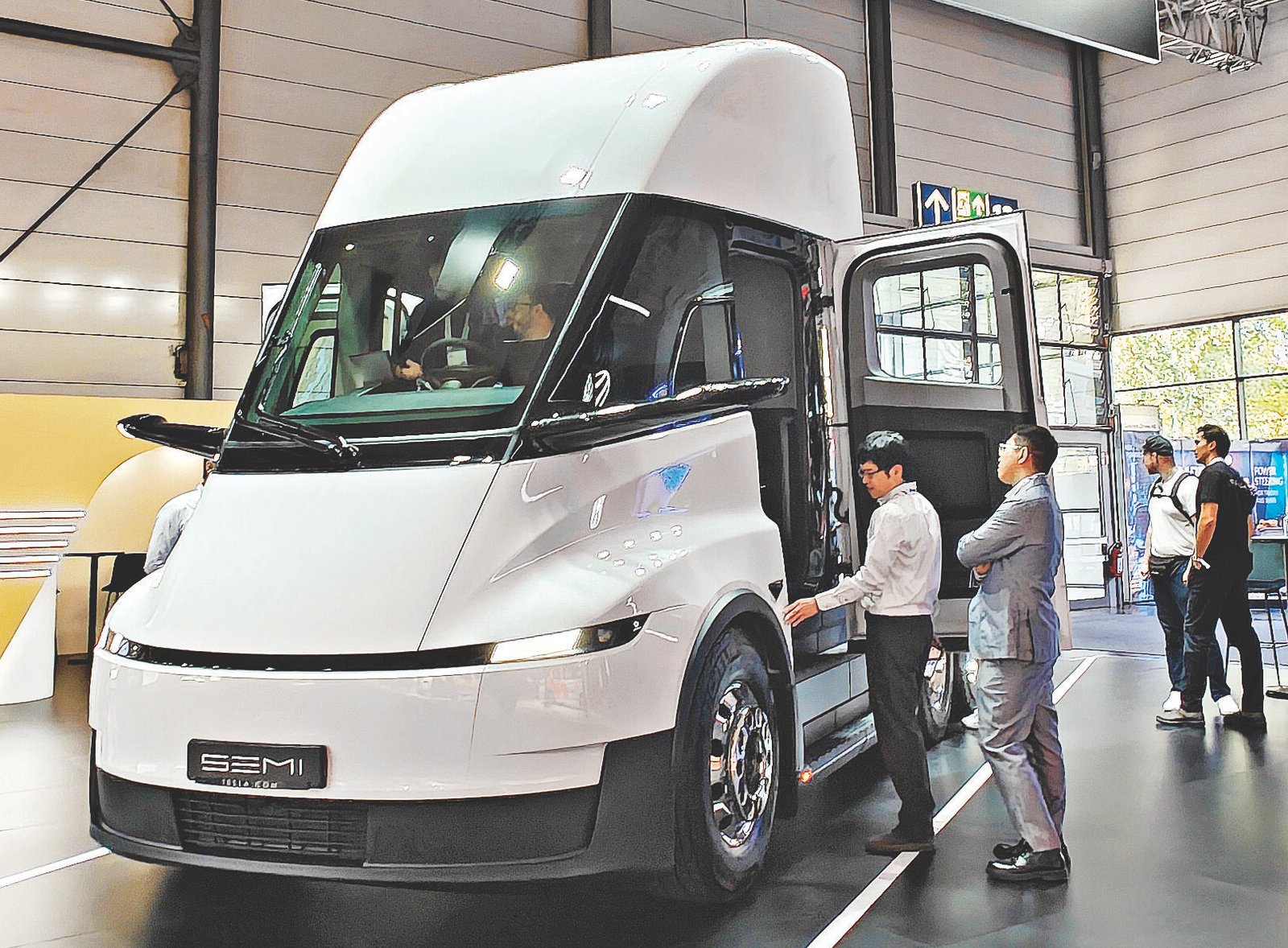
TESLA SEMI: UP TO 500 MILES
Tesla’s Semi brings a different proposition to the comparison. The company lists an estimated range of up to 500 miles and charging capability of up to 1.2 MW. Tesla has indicated deliveries beginning in 2026. The Semi’s stated range is approximately 805 km, but it is a US-market claim and should not be compared uncritically with European figures. Vehicle configuration, payload, test conditions, regulations and route profiles differ.
MEGAWATT CHARGING CHANGES THE EQUATION
The time required to recover the range is most crucial. In conventional freight operations, a truck’s working day is built around driving hours, mandatory rest periods, loading and unloading. Charging becomes commercially attractive when it can be integrated into those existing pauses rather than creating additional downtime. That is why MCS matters. MAN’s 750 kW system, Renault Trucks’ 700 kW capability, Volvo’s 680 kW system and BYD’s 1.5 MW claim demonstrate the direction of travel. Higher charging power could enable a long-haul truck to recover a substantial portion of its energy during a driver’s scheduled break.
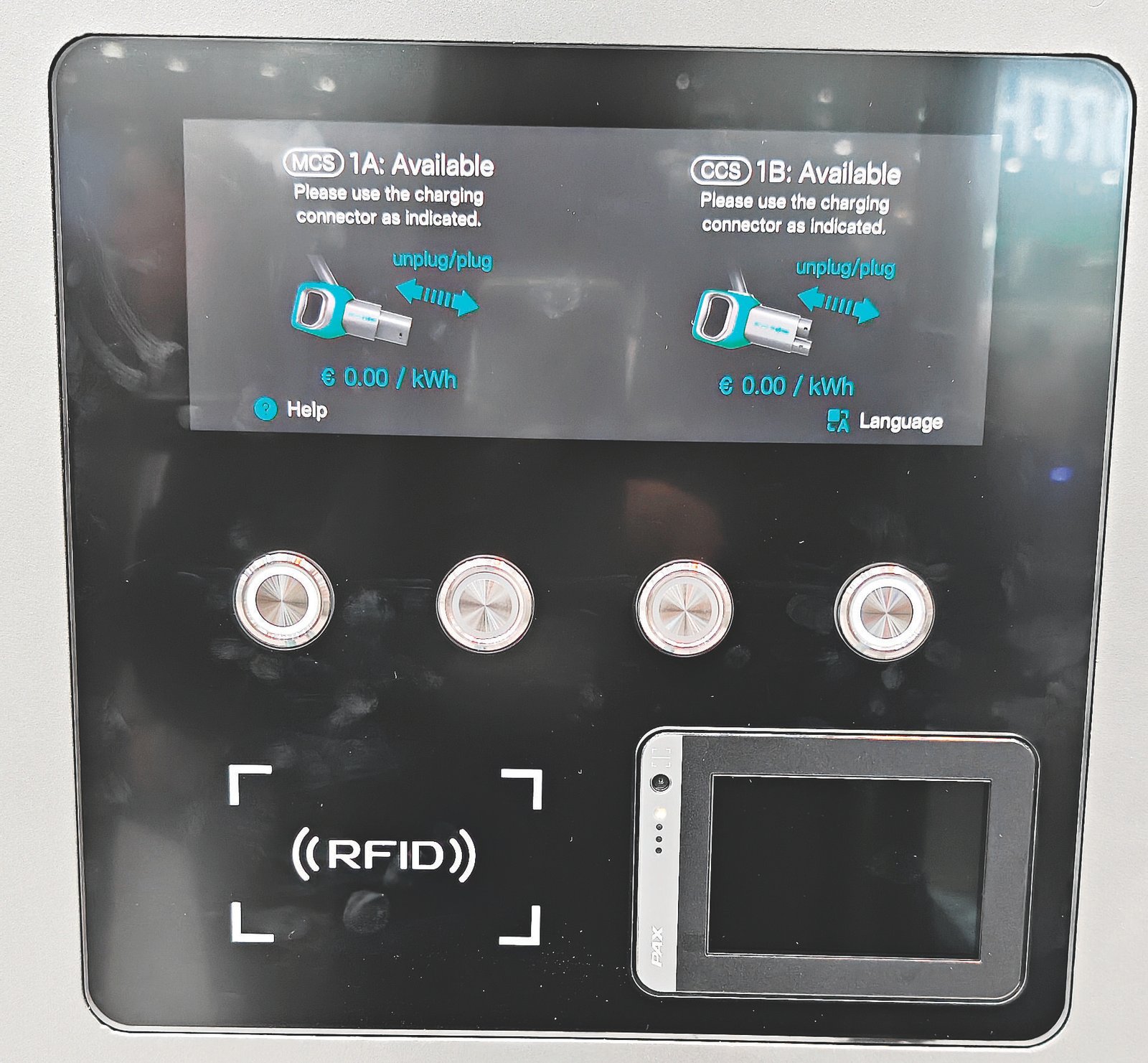
However, charging time depends on battery temperature, State of Charge (SoC), battery chemistry, vehicle configuration and the charging curve. Infrastructure must also supply the required power reliably, while grid connections, energy storage and site planning can add considerable complexity. A truck capable of accepting megawatt charging is not automatically part of a megawatt-charging network. Routes need compatible stations, fleets need predictable access, and operators need confidence that a planned stop will work in practice. The emerging tipping point will therefore depend as much on the infrastructure around the truck as on the technology inside it. Manufacturers, charging-network operators, utilities, logistics companies and governments will need to move together.
SANY E263 S:636 KWH BATTERY
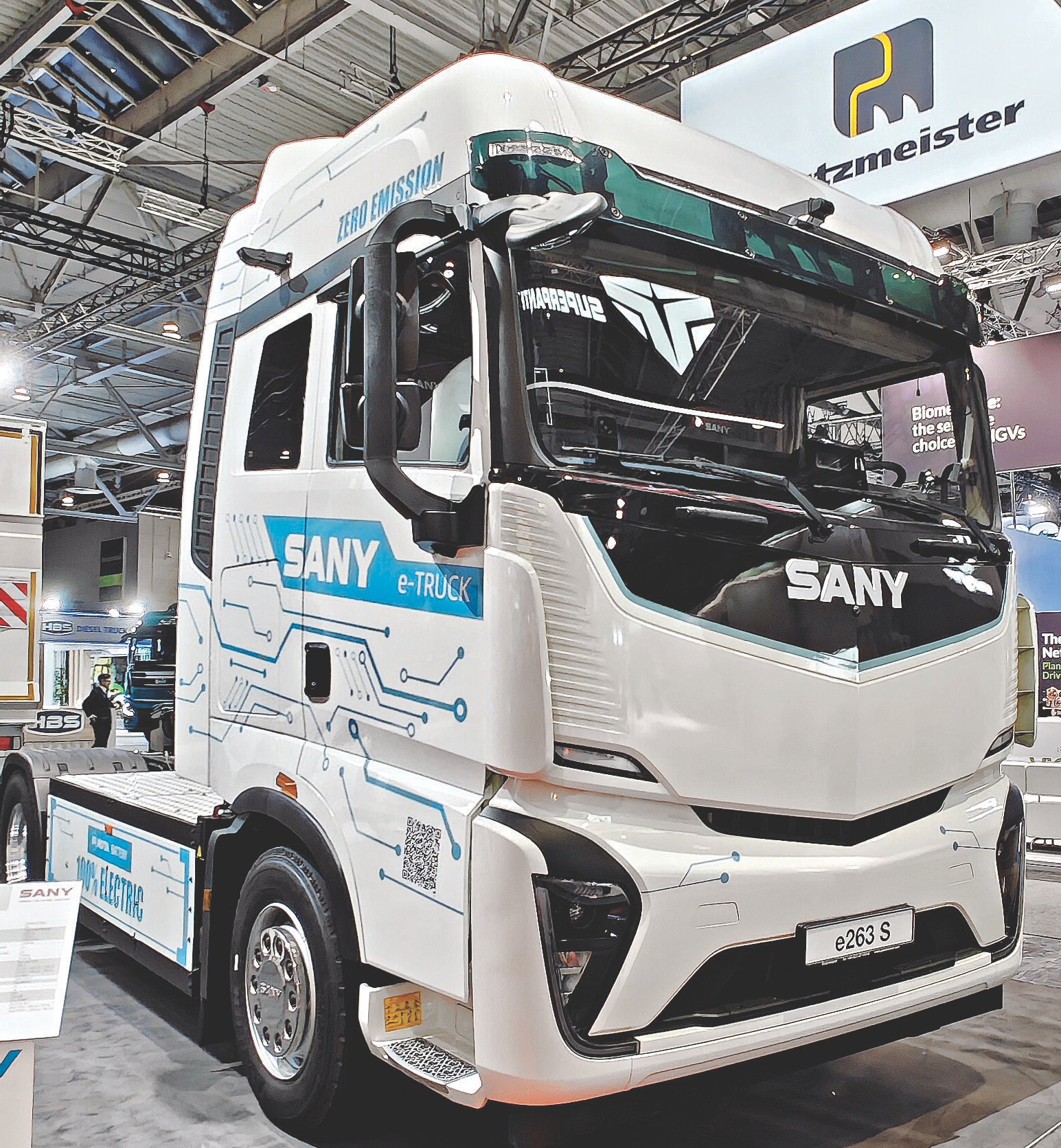
SANY displayed its e263 S 4×2 electric semi-trailer tractor, equipped with a 636 kWh lithium iron phosphate battery, an 800-volt electrical architecture and a dual-motor electric axle. Rated output is 420 kW, rising to a peak of 730 kW. Standard CCS Combo 2 charging is specified at up to 400 kW, with dual-gun charging capable of increasing the charging rate to as much as 700 kW. SANY gives the e263 S a GCW rating of 42 tonnes and an unladen weight of approximately 10.9 tonnes. The vehicle is intended for logistics and construction-related operations, positioning it between the conventional long-haul tractor and more specialised vocational applications. The manufacturer says it has received European whole-vehicle type approval.
The accompanying e263 R is a battery-electric chassis based on the same broad 4×2 architecture and 636 kWh battery. Its chassis format provides flexibility for body-mounted applications, rather than being restricted to tractor-and-trailer work. More important than the two individual models is SANY’s wider portfolio. The company has announced additional electric chassis for construction, logistics and municipal work, including multi-axle configurations. This matters because fleets rarely operate one type of truck alone. SANY’s European expansion also highlights a key commercial issue. New entrants need to back products with service workshops, parts availability, roadside assistance and dependable product support. Fleet confidence will depend on whether the entire support system can match the technology.
20 GREEN HCVS THAT BRING ABOUT A CHANGE
The vehicle below illustrate how manufacturers are approaching the transition. Not ranked, the right choice depends on route, payload, duty cycle, charging access and market availability. Manufacturer range figures are indicative and should not be read as directly comparable test results.
MAN eTGX:— A long-haul tractor with a claimed range of up to 720 km in its new 6×2 configuration and MCS capability up to 750 kW.
Renault Trucks E-Tech T 780—Long-haul electric tractor targeting up to 660 km, with up to 27.4 tonnes payload and 700 kW MCS capability.
Volvo FH Electric / FH Aero Electric —- Heavy-duty electric combinations up to 80 tonnes GCW, with a claimed range of up to 450 km at 64 tonnes. Launch planned for 2027.
BYD ETT 44 —- Electric tractor with a 651 kWh Blade Battery, claimed range up to 600 km and peak charging capability of up to 1.5 MW.
Tesla Semi — A US-focused long-haul proposition with an estimated range of up to 500 miles and charging capability up to 1.2 MW, now EU-compliant.
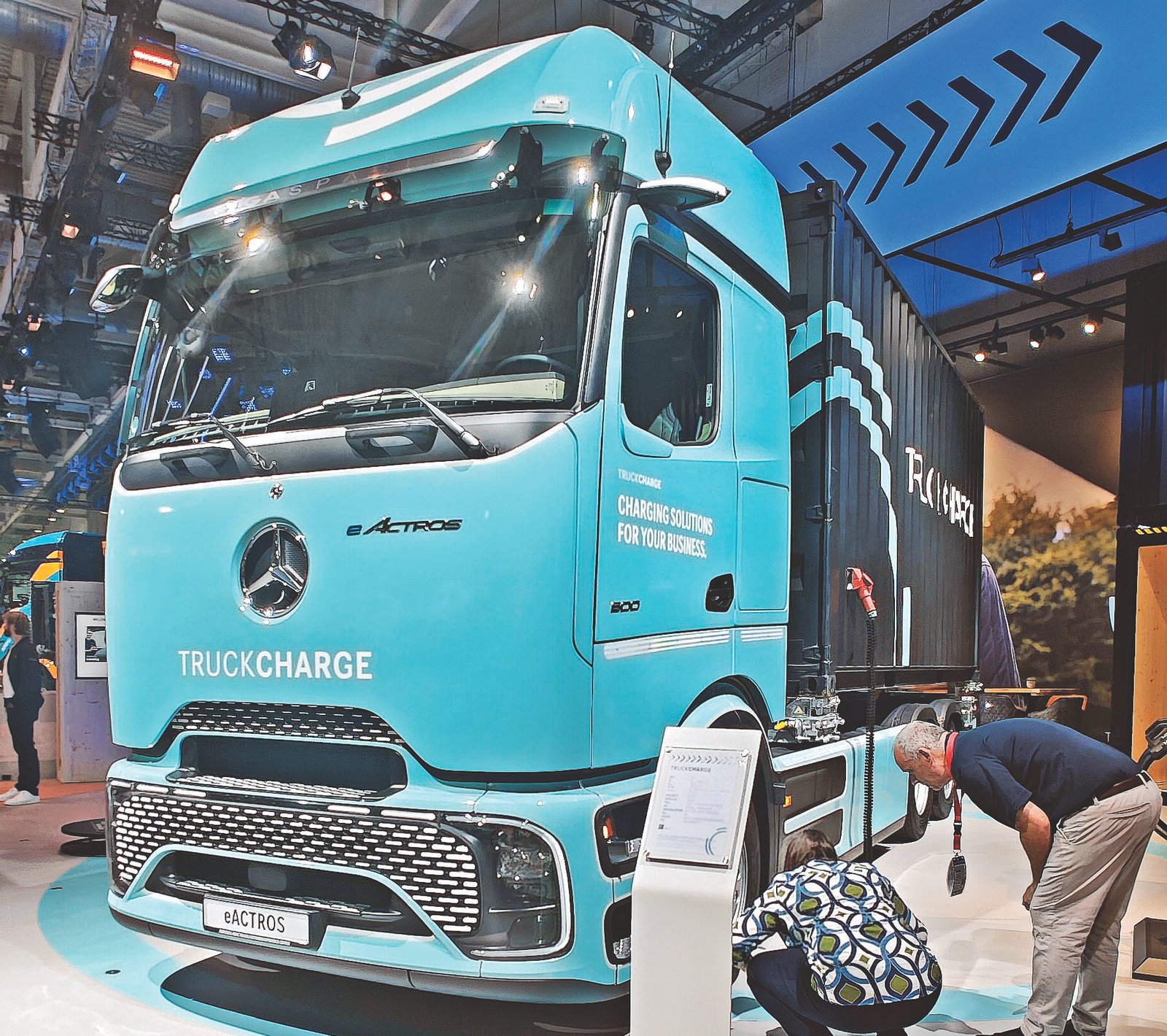
Mercedes-Benz eActors 600 — Daimler Truck’s battery-electric long-haul flagship, with a claimed range of up to 560 km in its most efficient configuration. It has accumulated substantial customer operating experience since deliveries began.
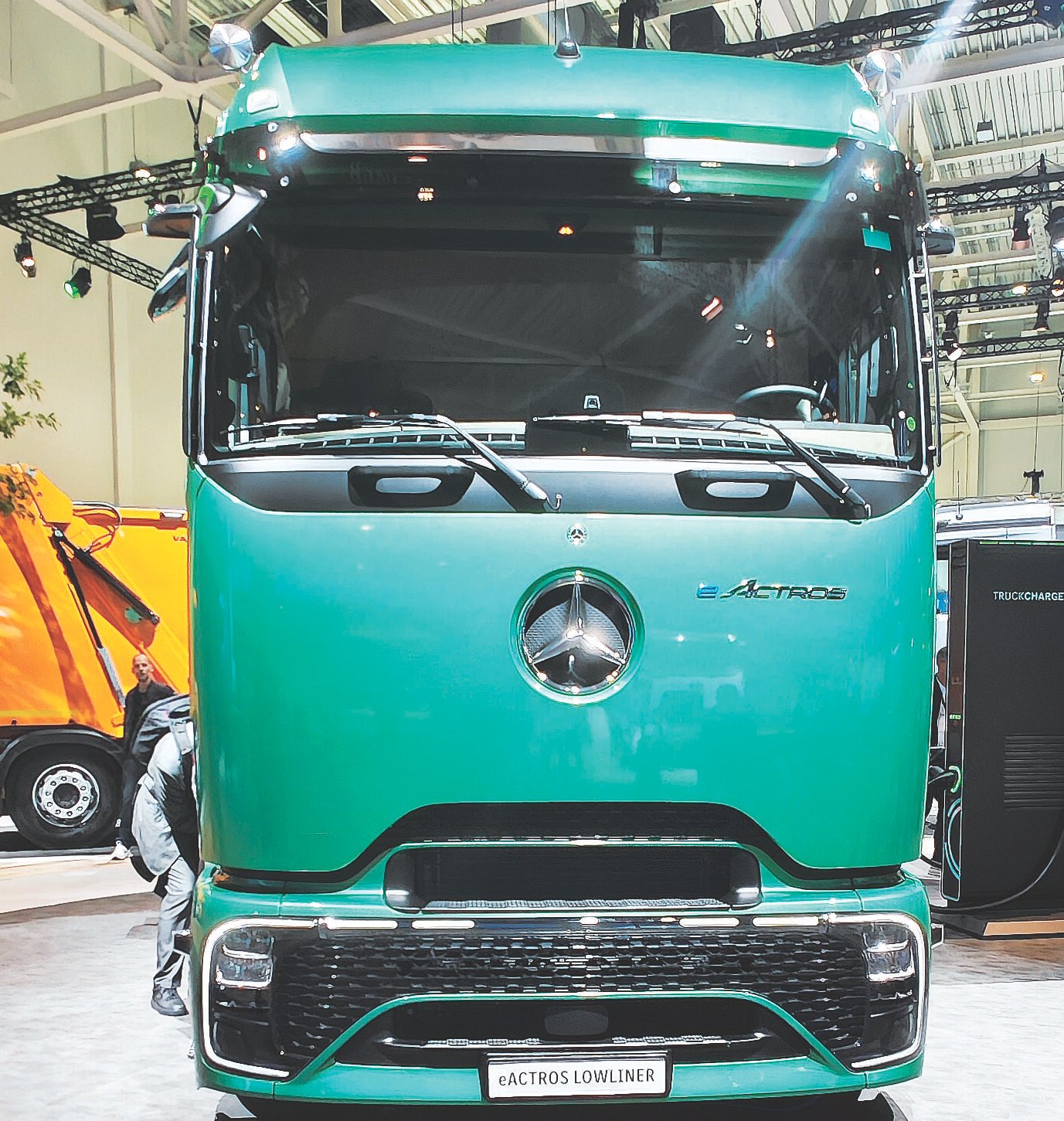
Mercedes- Benz eActors Lowliners—-A specialist long-haul concept aimed at high-volume transport using mega-trailers.
SANY e263 S — A 4×2 electric semi-trailer tractor with a 636 kWh LFP battery, 42-tonne GCWR and up to 400 kW standard CCS charging, with dual-gun charging available.
SANY e263 R — A 4×2 electric chassis using the same 636 kWh battery platform, aimed at body-mounted applications and distribution work.
Renault Trucks E-Tech T 585 — A complementary long-haul/regional tractor with a claimed range up to 500 km, payload up to 28.8 tonnes and MCS charging up to 525 kW.
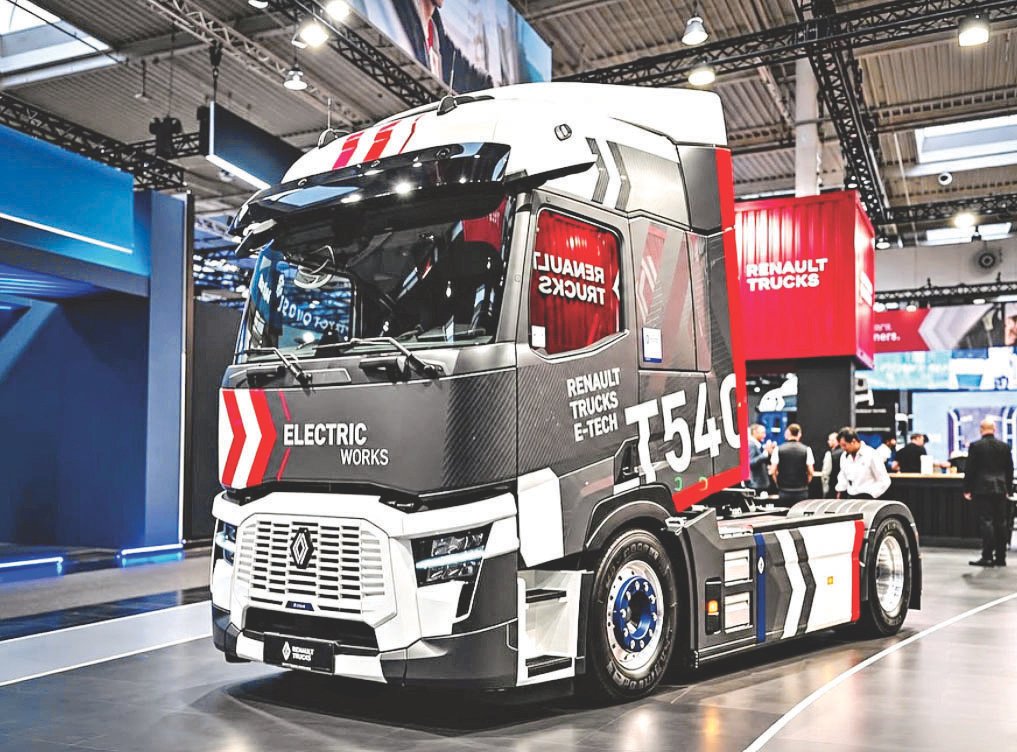
Renault Trucks E-Tech T 540 — A regional-transport variant with a claimed range up to 450 km, intended for operations where route predictability and payload are key.
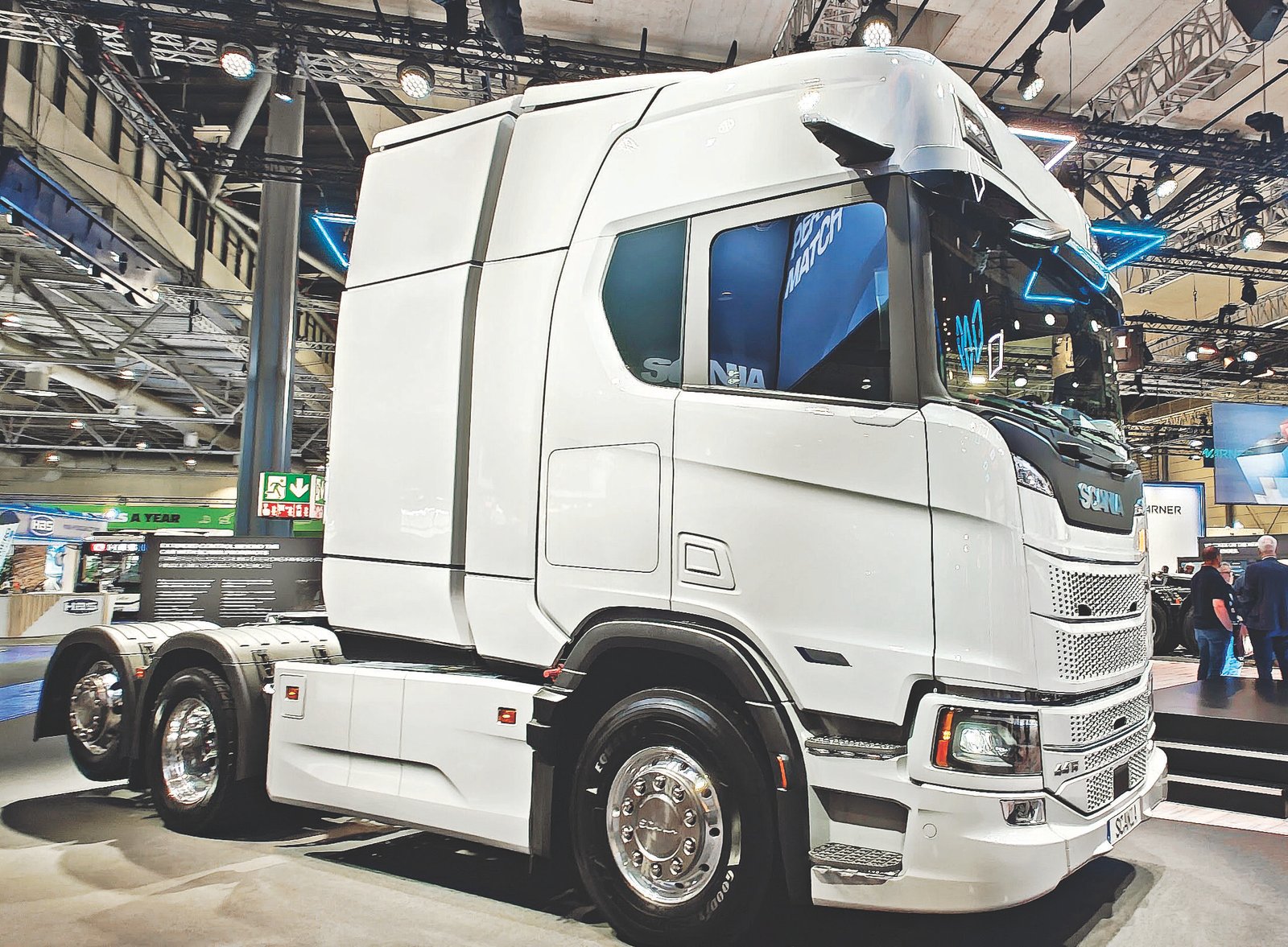
DAF XG+ Electric — Extends DAF’s electric range into its flagship cab family, with battery positioning and configuration options intended to improve payload and operating flexibility.
DAF XF Electric — A heavy-duty electric option for regional and longer-distance work, supported by DAF’s expanding chassis and service portfolio.
DAF XD Electric — A versatile electric platform for distribution and specialist body applications, where access, manoeuvrability and payload can matter more than maximum range.
Volvo FM Electric — A relevant platform for regional distribution and specialist applications, including operations where body integration and predictable routes support depot charging.
Volvo FMX Electric — A vocational proposition for construction and demanding work, demonstrating that electrification is extending beyond highway freight into specialised heavy-duty assignments.
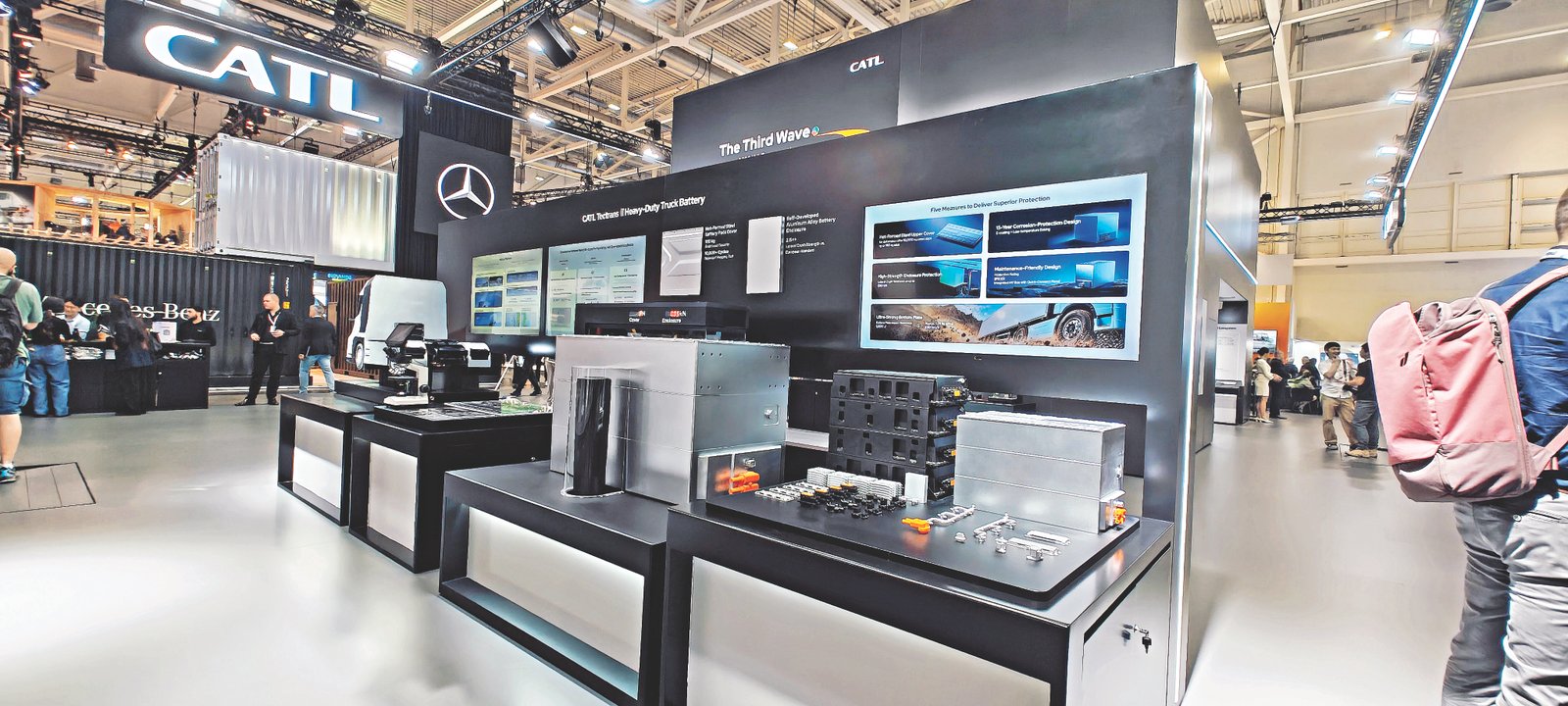
SuperPanther eTopas 600— China-origin SuperPanther is looking to make its mark in Europe’s electric heavy-duty truck market with the eTopas 600, a 4×2 tractor powered by a 621 kWh LFP battery supplied by CATL.
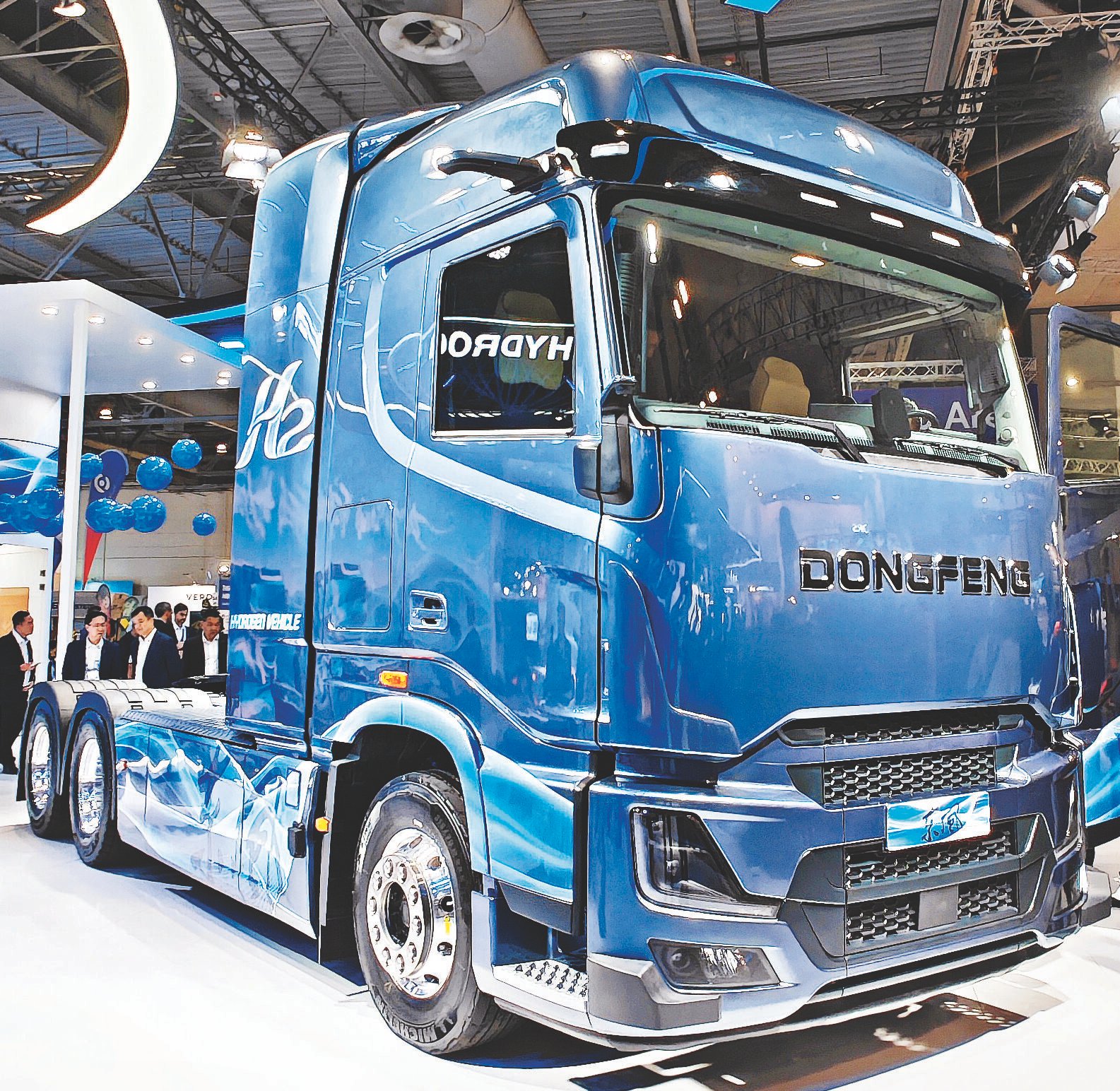
Dongfeng FCV Long-Haul Truck — Dongfeng’s hydrogen fuel-cell truck offers an alternative pathway with a 400 kW fuel-cell system and a 70 kWh power battery, with a claimed driving range of around 800 km.
DAF electric 6×4 and 8×4 rigids — Vocational configurations with driven tandem axles, designed for demanding construction duties and body-specific applications.
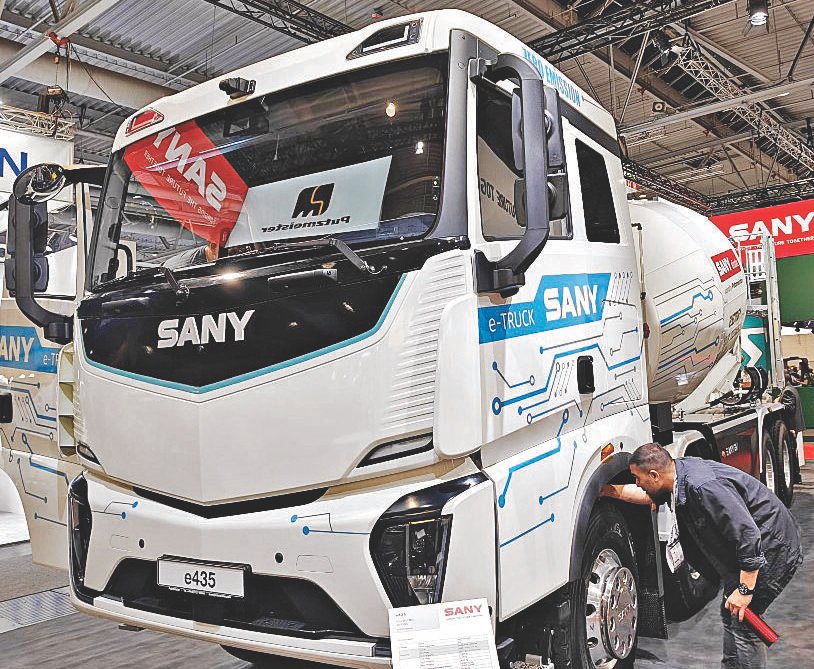
SANY e435 8×4 — An electric chassis aimed at concrete and construction work, with a stated 37-tonne technical GVW and 350 kWh LFP battery. Its inclusion demonstrates the breadth of the electric vocational portfolio, rather than a claim to long-haul range leadership.
DAF LOOKS BEYOND THE TRACTOR
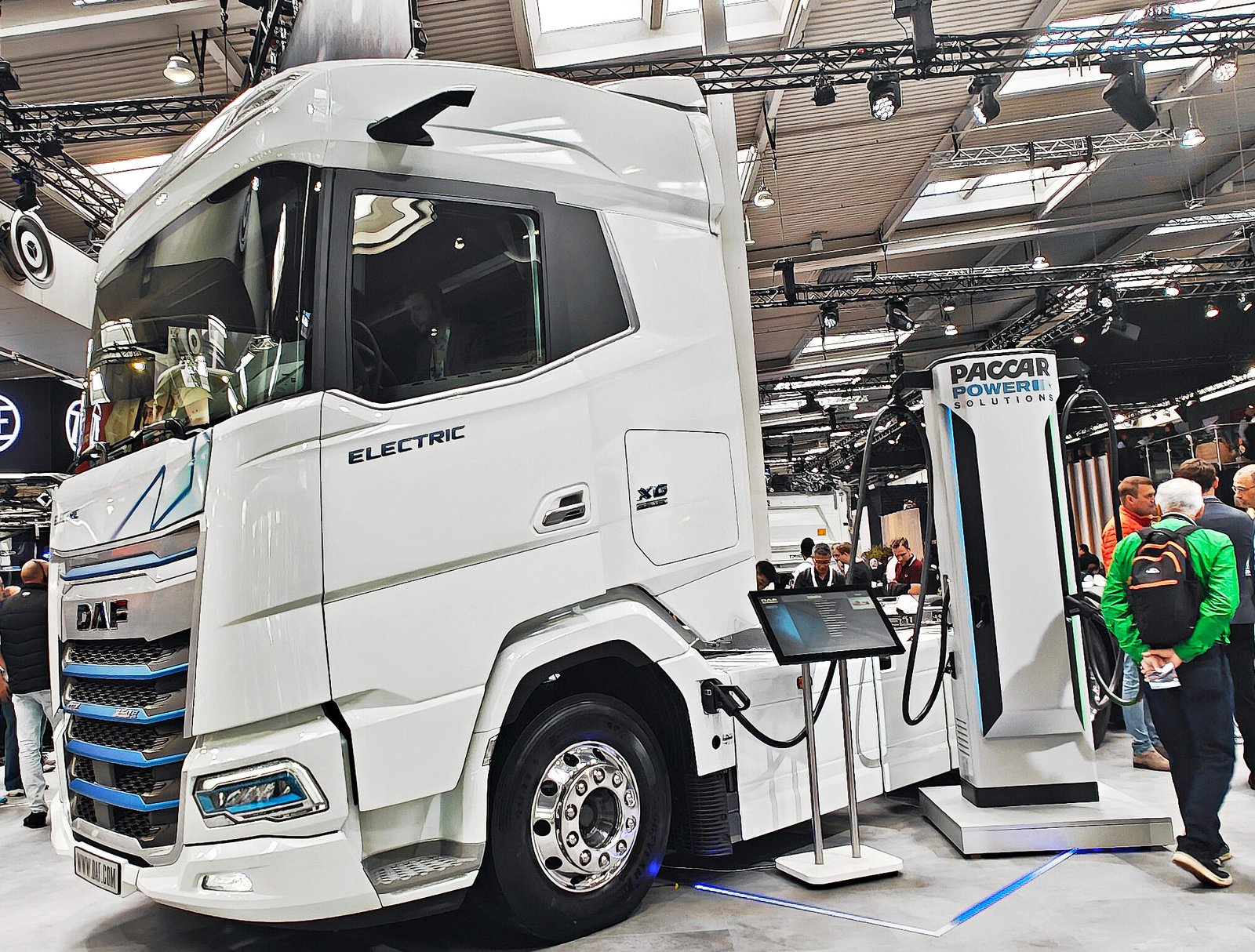
DAF’s electric portfolio is expanding across its XD, XF, XG and XG+ families. At IAA, the company highlighted the XG and XG+ Electric, electric tractor variants with additional axle configurations, rigid trucks and dedicated chassis for demountable-body applications. For vocational operations, DAF is adding electric 6×4 and 8×4 rigid trucks with driven tandem axles. Such configurations matter for construction and other demanding assignments, where traction, axle ratings and body integration are crucial. DAF has also focused on payload. Its revised battery positioning allows the packs to be placed further back, reducing front-axle load and improving weight distribution. The company says the configuration can deliver a payload increase of up to 2.5 tonnes in relevant applications compared with previous arrangements.
SUPERPANTHER ETOPAS 600
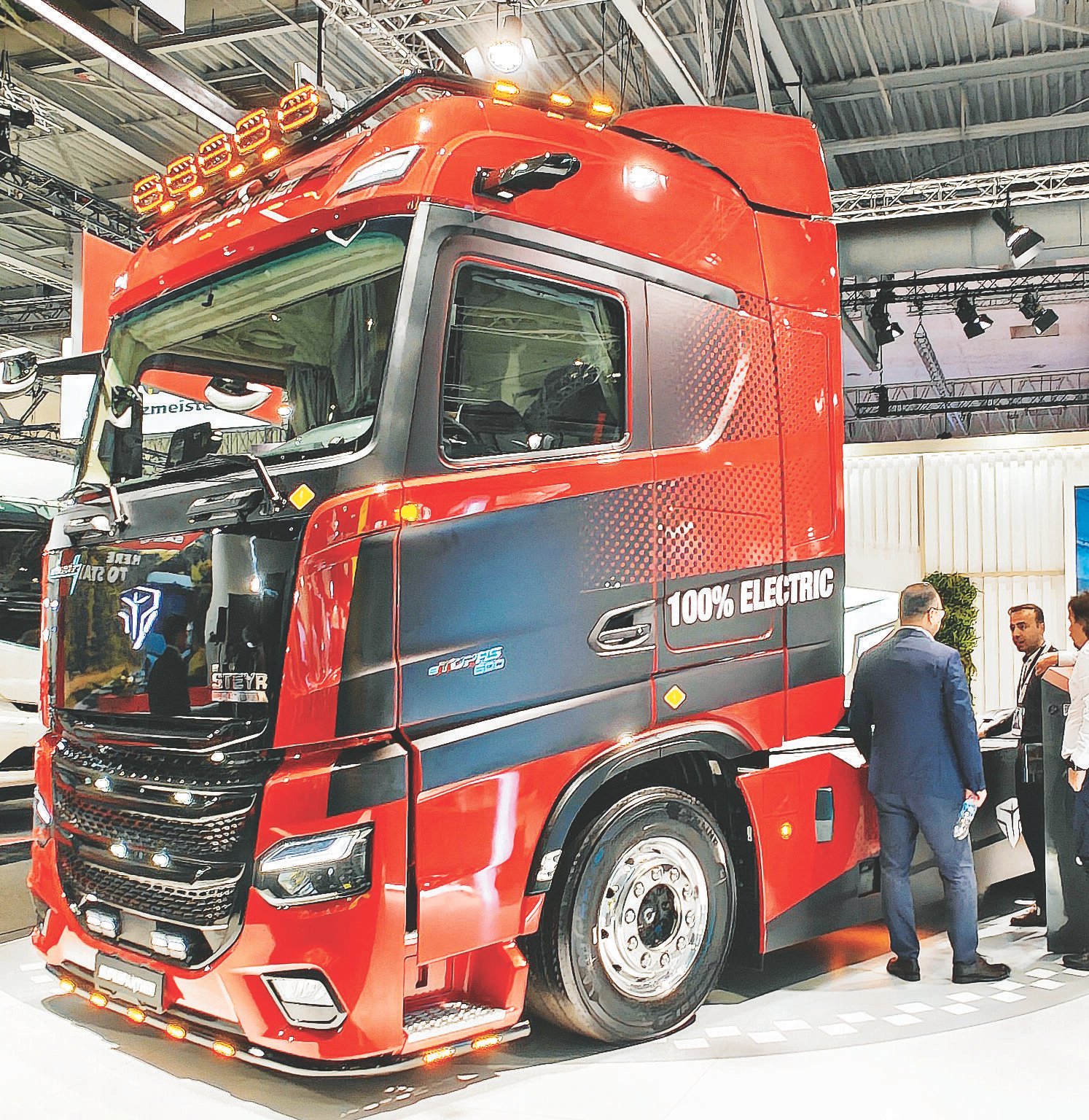
China-origin SuperPanther is looking to make its mark in Europe’s electric heavy-duty truck market with the eTopas 600, a 4×2 tractor powered by a 621 kWh LFP battery supplied by CATL. Its dual-motor electric axle delivers 394 kW of continuous power and up to 692 kW at peak, with the manufacturer quoting a range of up to 560 km. The truck’s dual-CCS2 charging arrangement supports a combined charging power of up to 660 kW, enabling a 20–80 per cent charge in around 38 minutes under suitable conditions. SuperPanther is building a European footprint through assembly at Steyr Automotive in Austria, drawing on both Chinese and European components. DHL Freight has deployed an eTopas 600 in the Netherlands for domestic and cross-border transport, reporting a working range of up to 500 km per charge.
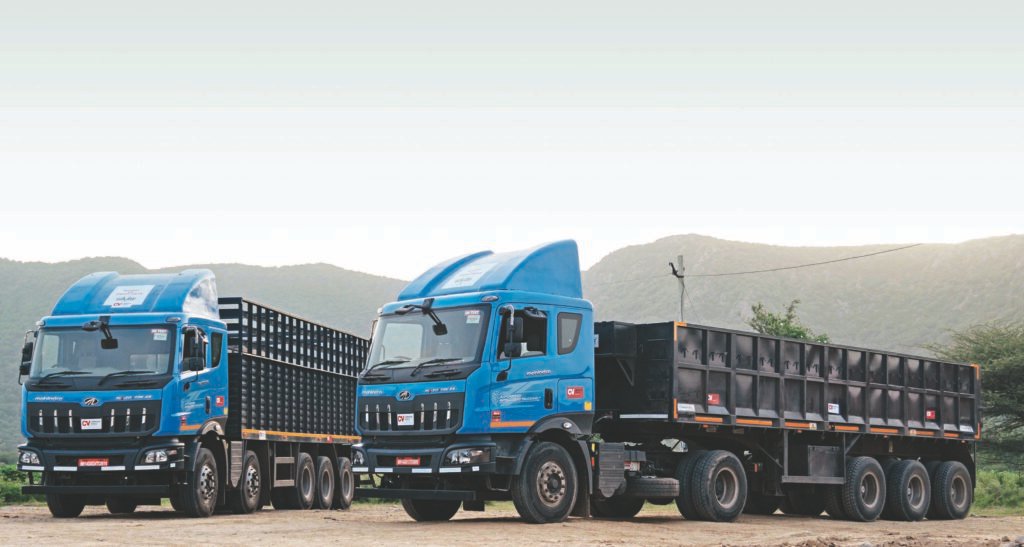
India’s electric trucking transition will follow its own trajectory, shaped by freight economics, operating conditions and the pace of charging infrastructure development. The names to watch include the Tata Prima E.55S electric prime mover and Prima E.28K tipper, Ashok Leyland AVTR 55T Electric, Montra Electric Rhino 5538 EV and Blue Energy Motors BEM 5548e EV. The next wave could broaden the field further. JSW’s AMPSTAR has entered commercial electric mobility with the 55-tonne tractor-trailer. The first commercial sale of 100 AMPSTAR 4×2 55T Tractor Truck electric prime movers has been recorded for heavy-duty industrial haulage at JSW Cement, Vijaynagar. The AMPSTAR 4×2 and 6×4 Tractor Trucks have both receive certification under the Central Motor Vehicle Rules (CMVR) from the Automotive Research Association of India (ARAI), while Olectra GreenTech is developing its own electric truck and tipper platforms expected to drive the domestic market closer to the tipping point. India’s challenge is to make it commercially repeatable at scale with learnings from the counterparts.
The technology is moving quickly, but the economics remain complicated. Operators must consider financing, electricity tariffs, charging infrastructure, battery warranties, maintenance, residual values, payload, vehicle utilisation and the cost of downtime. The grid is another constraint. A depot charging several heavy-duty vehicles simultaneously may require substantial electrical capacity, new connections, on-site storage or managed charging. MCS hubs could enable faster turnaround, but their installation will demand investment and coordination. The tipping point will be visible in repeat orders, high utilisation, dependable infrastructure and fleets reckoning them as mainstays.