

Aadinath Bulk’s Volvo bus fleet is a long-term growth strategy built on high uptime and operational efficiency gains,Richa Tyagi writes.
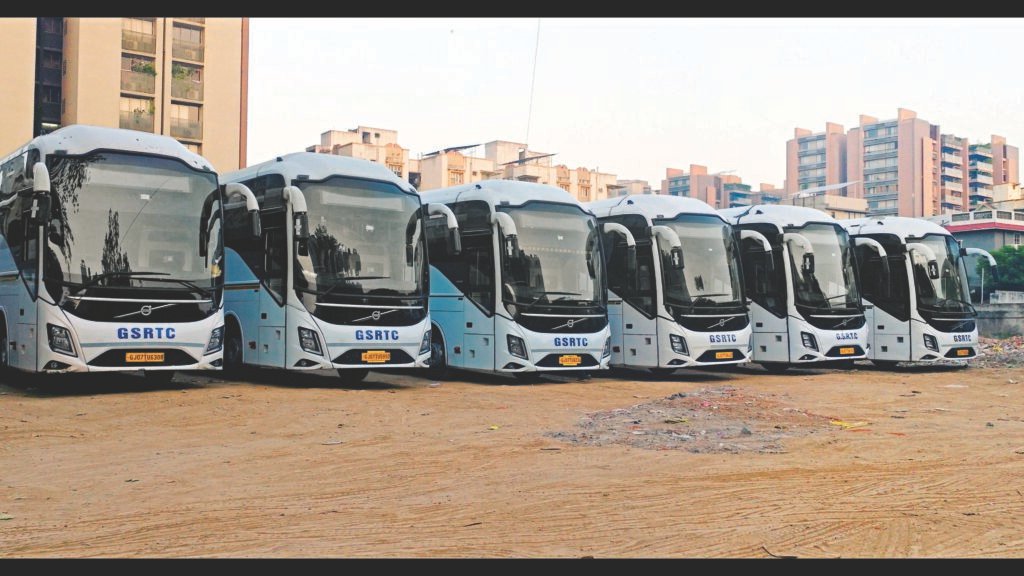
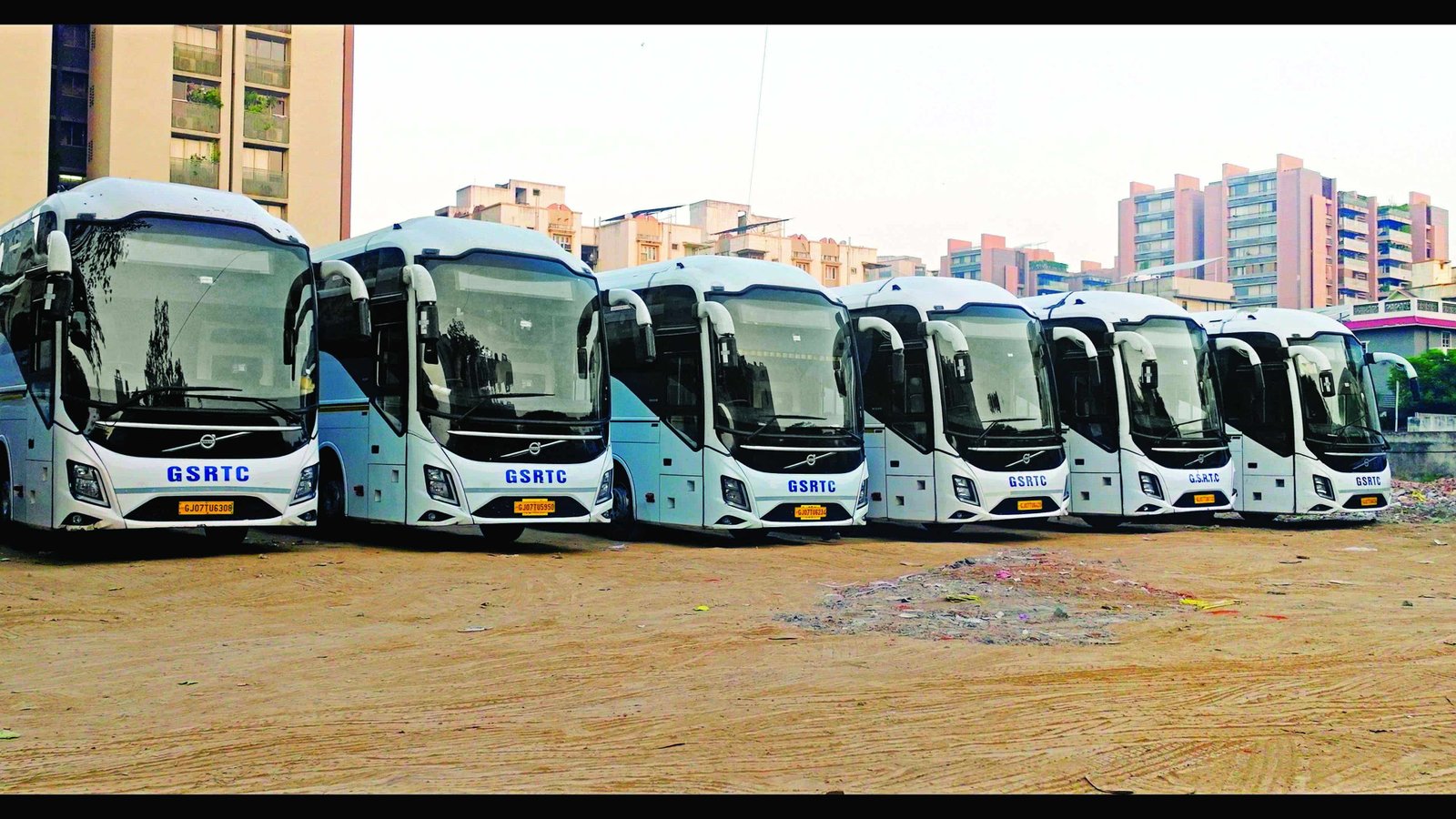
Originating in 1996 within the industrial bulk freight sector, where profitability depended heavily on operational reliability, Aadinath Bulk established a key growth engine by expanding into passenger transit. By 2006, the business broadened its scope across Ahmedabad through urban Public-Private Partnership (PPP) frameworks, entering school transportation, staff shuttle services, and private intercity operations. A significant breakthrough occurred in 2018 when Aadinath Bulk Pvt. Ltd. entered premium state-level operations by winning a PPP contract with the Gujarat State Road Transport Corporation (GSRTC) for 22 Volvo buses.
What began as a 22-Volvo PPP contract in 2018 expanded to more than 100 Volvo coaches and an additional 28 units with a strong augmentation plan, clearly demonstrating that operational performance, passenger acceptance and financial viability justified continuous fleet expansion. Today, the fleet numbers over 375 buses, which features 110 multi-axle 13.5m Volvo 9600 coaches. On a monthly average, the company’s fleet clocks an estimated thirty lakh kilometres. For Manoj Ahir, COO of Aadinath Bulk Pvt. Ltd., the 2018 addition of 22 Volvo vehicles represented both a critical corporate milestone and the realisation of a personal goal dating back to his student days. Ahir says the business case for premium coaches rests on the Total Cost of Operations (TCO) and Return on Investment (RoI) as he hailed the long-standing Volvo-Aadinath partnership with a proven track record.
MAXIMISING UPTIME
The operator’s Volvo fleet has logged over 3.5 crore cumulative kilometres with an off-road penalty and breakdown ratio under one per cent. Volvo’s on-site support and weekly cluster-management reviews are said to have aided in the company attaining this benchmark metric. Integration is known to offer real-time monitoring of vehicle performance, maintenance planning and uptime management, in turn ensuring superior service reliability. Volvo services are scheduled every 80,000 km, with major overhauls at 560,000 km. Maintenance costs range from rupees three to Rs. 3.50 per km in the early cycle, rising as components age.
The operational model has also been tested during periods of exceptional passenger demand, like during the Maha Kumbh pilgrimage. GSRTC Volvo services played a critical role in connecting pilgrims on the Ahmedabad–Somnath–Dwarka, Ahmedabad–Statue of Unity, Ahmedabad–Kutch, Ahmedabad–Ambaji, Ahmedabad–Udaipur, Ahmedabad–Mount Abu, Ahmedabad–Indore and Ahmedabad–Mumbai routes.

MANOJ AHIR, Chief Operating Officer, Aadinath Bulk Pvt. Ltd.
ACTIVE SAFTEY
Aadinath Bulk’s safety measures include driver training, GPS monitoring, ADAS on select buses and control-centre-monitored cameras. An example of customer feedback benefiting OEMs, Manoj Ahir shared that the feedback during the Volvo 9600 coach rollout led to some items from Aadinath’s delivery checklists being incorporated into Volvo Buses India’s. The business acumen comes from the Chartered Accountant’s formal training in the Volvo syllabus. The determination to certify as a Volvo driver himself ensured executive decisions reflect workshop and road realities rather than just balance sheets. With the firm belief that shoddy practices in the bus and coach segment by fly-by-night operators must be deterred to enhance on-road safety of coaches, Manoj Ahir urged for stringent measures like penalties and detention of the sleeper coaches found to flout norms.
FUTURE TRAJECTORY
Passenger preferences have shifted toward air-conditioned comfort, stringent cabin hygiene, and strict punctuality, pushing route satisfaction ratings past 4.6 out of 5. In response, Manoj Ahir highlights a strategic fleet evolution centred on 13.5m coaches. These vehicles have overtaken traditional 12m buses as the new benchmark, while 15m variants are increasingly deployed on high-density routes. Manoj Ahir opines that opting for a 15m Volvo Coach over a 13.5m of the 9600 adds an estimated 15-20 per cent capacity with negligibly higher TCO owing to the multi-axle architecture adding to the costs, for example. Additionally, sleeper coaches are becoming the preferred choice for journeys over 400 km, leading State Transport Undertakings (STUs) to feature them in new procurement tenders.
The proven success of GSRTC’s Volvo model has encouraged neighbouring state transport undertakings and private operators to expand premium coach fleets. Aadinath Bulk’s operational excellence earned it the title of ‘Best Private Stage Carriage Operator – West’ at Prawaas 5.0, an honour presented by the Governor of Gujarat. Financial and operational milestones reflect this momentum. The company generated approximately Rs. 116 crore in revenue last fiscal year and targets upwards of Rs. 150 crore in the upcoming period. Managing intercity, corporate, and private sectors, its fleet logs nearly one lakh kilometres per day. Key achievements include operating a 175-bus fleet for the Ahmedabad Municipal Transport Service (AMTS). As part of its move into sustainable urban mobility, Aadinath secured an AMTS contract for 150 electric buses, with plans to roll out the initial 50 to 60 units over the coming quarters. Nevertheless, Ahir emphasises that premium diesel coaches will continue to serve as the mainstay for long-distance intercity operations. “India needs better intercity mobility and a faster transition to clean urban transport concurrently; they are complementary priorities,” Ahir notes. Ultimately, Volvo coaches remain the foundation of Aadinath’s long-haul network, while electric buses drive its city transit ambitions. As organised intercity travel expands, the PPP between GSRTC, Aadinath, and Volvo shows how effective collaboration can deliver higher passenger satisfaction, strong asset efficiency, and long-term sustainability. GSRTC Volvo coaches have emerged as a compelling alternative to train and air travel by offering city-centre connectivity, comfortable overnight journeys and competitive travel times.